The IBM Cost of a Data Breach Report 2026, conducted by the Ponemon Institute, studied 602 organizations impacted by data breaches from March 2025 through February 2026. The report highlights how artificial intelligence is transforming the cybersecurity landscape. Attackers are increasingly using AI to automate reconnaissance, generate phishing campaigns, create malware, and accelerate attacks at a scale that traditional defences struggle to match.
A data breach is defined as an event in which records containing PII; financial or medical account details; or other secret, confidential or proprietary data are potentially put at risk.
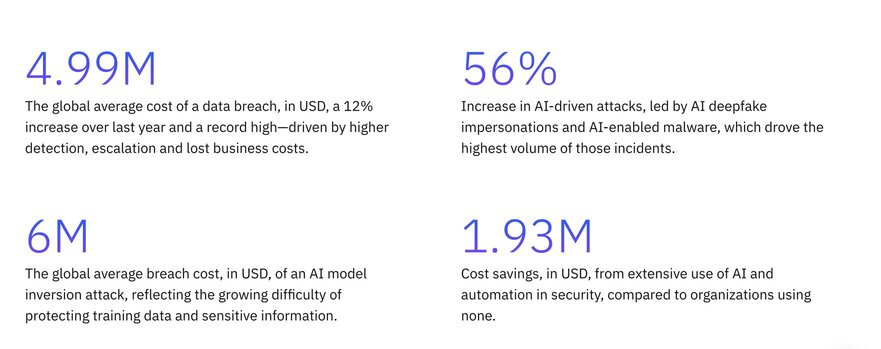
The 21st Annual IBM Cost of a Data Breach Report found that the global average cost of a data breach reached a record USD 4.99 million, while AI-driven attacks increased by 56% and added an average of USD 1 million to the cost of a breach. The findings also reinforce that organizations investing in AI-powered security, identity management, automation, and governance are better positioned to reduce breach costs and recover faster.

Key Findings and Insights from the 2026 IBM Cost of a Data Breach Report
The Average Cost of a Data Breach Reached a Record High
AI-driven attacks increased 56% over last year’s study. AI-driven attacks added an average of USD 1 million per breach as AI tools allow attackers to increase their velocity and scale. That speed is reshaping breach economics—and not in a good way.
Organizations in the United States experienced the highest average breach cost at USD 11.5 million, while Canada’s average reached USD 5.20 million.
Global costs hit a record high
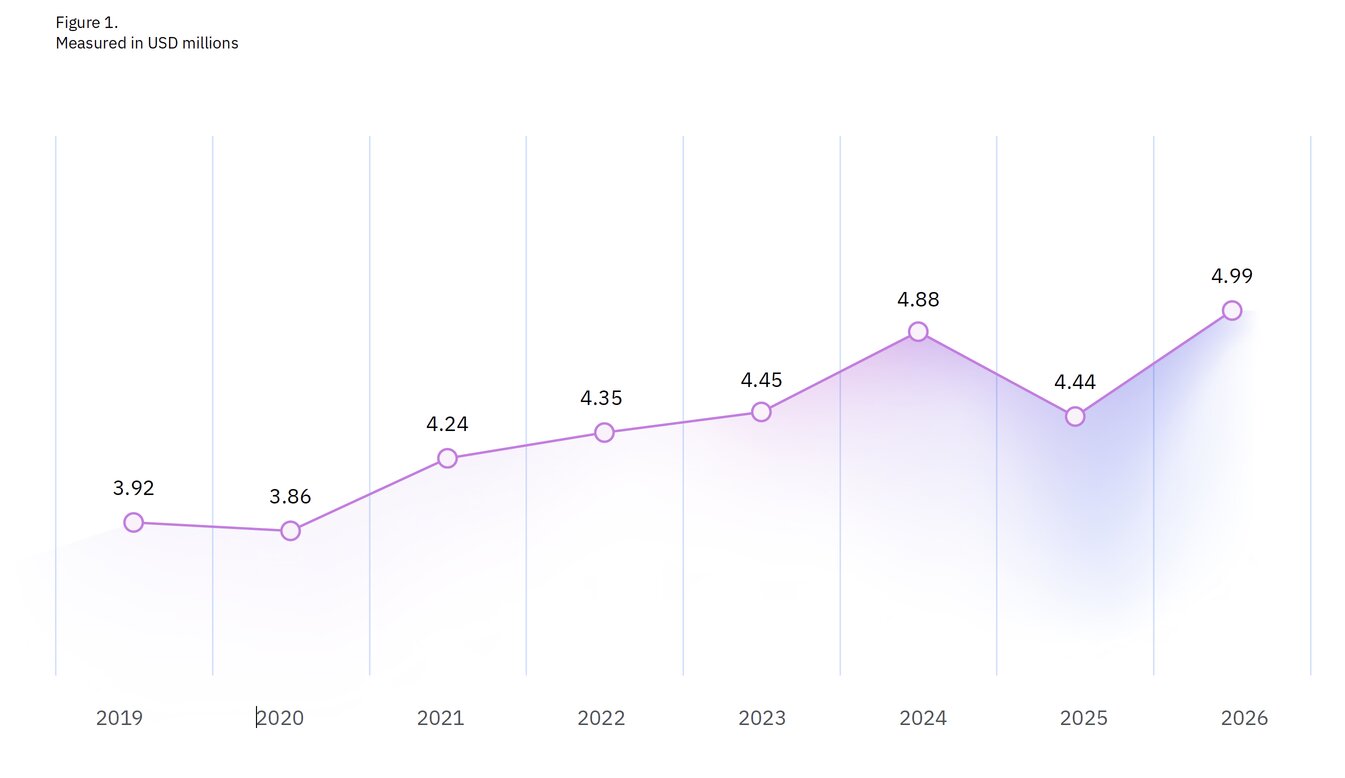
The global average cost of a data breach rose to an all-time high this year, reaching USD 4.99 million. That figure represents a 12% spike over last year—when the average cost dipped 9%— and continues an upward trajectory since the pandemic. This increase was driven largely by detection, escalation, and lost business costs, including costs related to disrupted operations and customer churn.
AI and automation remain among the most effective ways to reduce breach impact. They help security teams move at machine speed and save an average of USD 1.93 million in costs. However, the adoption of these tools across the security lifecycle remains uneven.
The global average cost of a data breach rose to an all-time high this year, reaching USD 4.99 million.
AI Systems Are Becoming Targets
The report found that organizations are not only facing AI-powered attackers—they are also experiencing attacks directly targeting AI models and applications. Among AI-related security incidents:
- AI model inversion attacks averaged USD 6.07 million
- Prompt injection incidents averaged USD 5.89 million
- Cloud misconfigurations affecting AI workloads averaged USD 5.25 million
- Malicious AI models averaged USD 4.94 million
- Model evasion attacks averaged USD 4.72 million
56% Increase in AI-driven attacks, led by AI deepfake impersonations and AI-enabled malware, which drove the highest volume of those incidents.
Breach response times rose
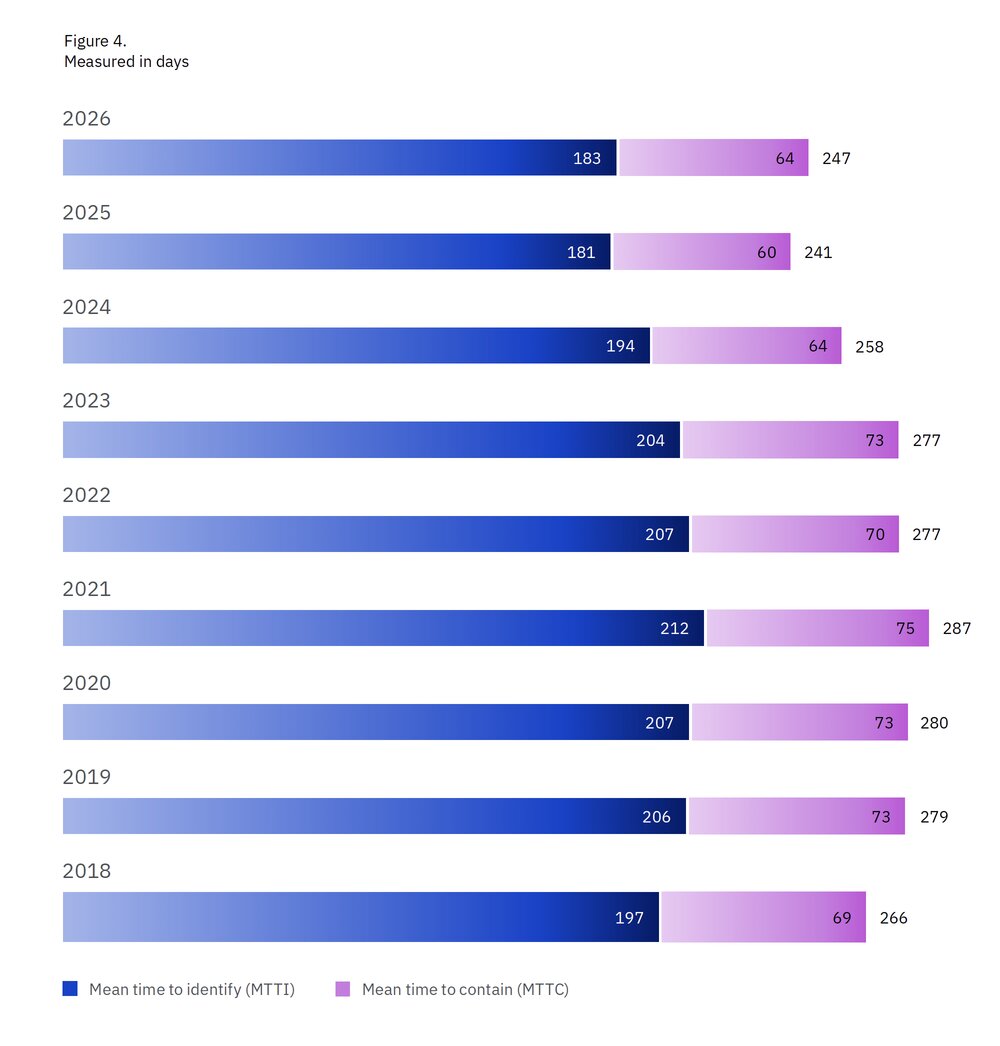
The mean time organizations took to identify and contain a breach rose to 247 days, a slight 2.5% uptick that reversed a five-year decline. In that time, security teams using AI and automation have steadily improved their mean time to identify (MTTI) and mean time to contain (MTTC) attacks. However, new threats from AI-driven attacks are challenging even the quickest response times and rewiring the security defence clock.
Most breaches targeted customer PII
Share of breaches that involved stolen or compromised customer PII
Attackers targeted customer PII over other types of data by a wide margin. At 52%, it was the most stolen or compromised data type this year, costing USD 192 per record on average. Customer PII can include tax identity (ID) numbers, emails and home addresses, and can be used in identity theft and credit card fraud.
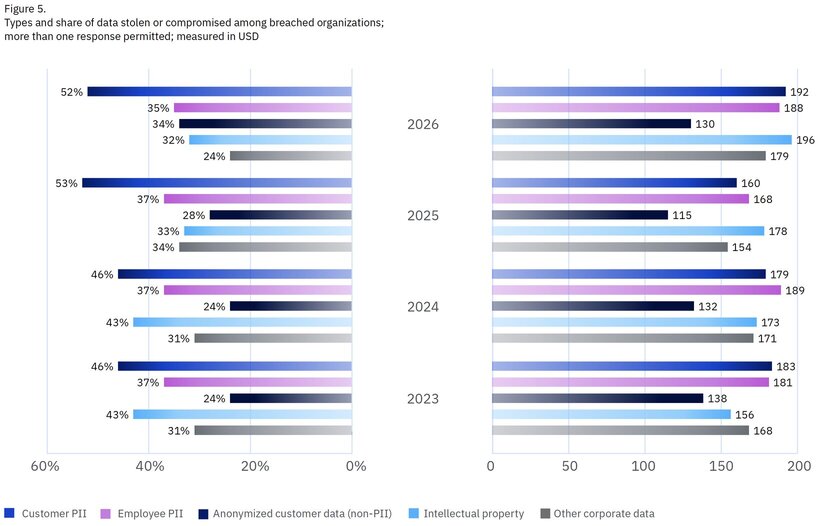
Employee PII was targeted in 35% of attacks and cost as much as USD 188 per record on average. Intellectual property (IP) was stolen or compromised in nearly a third of data breaches (32%). It was the costliest type of breached data at an average of USD 196 per record.
What This Means for Your Organization
The 2026 IBM Cost of a Data Breach report makes one thing clear: organizations can no longer rely solely on traditional cybersecurity practices. As attackers leverage AI to operate at machine speed, organizations should prioritize:
- AI governance and oversight
- Identity and access management (IAM)
- Security AI and automation
- Continuous monitoring
- Cloud security posture management
- Protection of AI models and applications
- Securing non-human identities and AI agents
Organizations that integrate these capabilities into their cybersecurity strategy will be better positioned to detect threats earlier, reduce breach costs, and respond more effectively to AI-powered attacks.
Building Cyber Resilience in the Age of AI-Driven Threats
The IBM Cost of a Data Breach 2026 report highlights a fundamental shift in cybersecurity. Organizations are no longer defending against attackers operating at human speed; they are defending against attackers operating at machine speed.
Traditional security controls remain essential, but they are no longer sufficient on their own. AI governance, identity security, continuous monitoring, cloud security, non-human identity management, and security automation must become core components of every cybersecurity strategy.
The report also reinforces that AI security extends beyond protecting AI models. Organizations must secure the surrounding ecosystem, including identities, APIs, cloud workloads, data pipelines, and AI-enabled business processes. As AI adoption accelerates, organizations that treat AI governance and cybersecurity as strategic business priorities will be better equipped to reduce operational risk, maintain customer trust, and improve resilience against increasingly sophisticated threats.
How Reputiva Can Help
Whether you’re beginning your AI journey or expanding AI across your organization, security should evolve alongside adoption—not after an incident occurs.
Reputiva helps organizations strengthen their cybersecurity posture through:
- Cloud Security Assessments
- Identity and Access Management (IAM)
- AI Security and Governance
- Microsoft 365 and Google Workspace Security
- Security Best Practices and Advisory Services
- Cloud Security Architecture Reviews
By combining cloud expertise, cybersecurity best practices, and AI governance, we help organizations build secure, resilient, and AI-ready environments that can better withstand today’s evolving threat landscape.
Learn how Reputiva can help your organization build a secure, resilient, and AI-ready future.