WordPress is the world’s most widely used content management system and the most popular software for building websites.
According to the latest W3Techs WordPress usage statistics, WordPress powers approximately 41.5% of all websites and accounts for about 59.3% of websites using a known content management system. W3Techs updates its technology usage reports daily.
A separate analysis published by WordPress.com reports that WordPress powers over 43% of the internet and commands a 61.4% share of the content management system market, more than all other CMS platforms combined.
WordPress is popular because it is flexible, open source, relatively accessible, and supported by an extensive ecosystem of plugins and themes. It can power blogs, company websites, publishing platforms, membership sites, online stores, enterprise portals, and web applications. However, that popularity also makes WordPress an attractive target for attackers.
Vulnerable plugins, outdated themes, compromised administrator accounts, malicious file uploads, weak hosting configurations, and inadequate monitoring can expose a WordPress website and the organization behind it.
That is why Reputiva is launching:
The Reputiva WordPress Security Series: 52 Weeks to a More Secure Website
Over the next 52 weeks, we will publish one practical article each week to help website owners and organizations understand WordPress security risks and strengthen the controls that protect their websites.
Why WordPress Security Requires Continuous Attention
WordPress security is not a one-time task. A website’s security posture changes whenever software is updated, a plugin is installed, a new administrator is added, third-party access is granted, or a new vulnerability is discovered. Attackers frequently use automated tools to search for outdated plugins, weak credentials, exposed login pages, insecure files, and vulnerable server configurations.
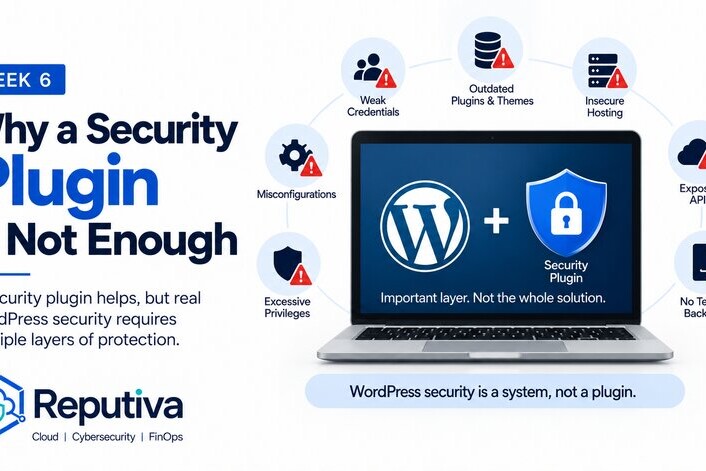
Installing a security plugin can help, but it is not a complete security strategy. Effective WordPress security requires layered controls across user access, software maintenance, website configuration, hosting infrastructure, monitoring, backups, and incident response.
Who Is This Series For?
The series is designed for:
- Small and medium-sized businesses
- Nonprofits and community organizations
- Publishers and media platforms
- Website owners and administrators
- Developers and WordPress agencies
- Marketing and communications teams
- IT and cybersecurity professionals
The articles will provide practical guidance for both technical teams and organizational leaders responsible for managing website risk.
What the Series Will Cover
Across the 52 weeks, the Reputiva WordPress Security Series will cover the following domains:
- WordPress security foundations
- Identity and access management
- Passwords and authentication
- WordPress core security
- Plugin and theme security
- File upload and configuration security
- Database security
- Hosting and server hardening
- Cloudflare and perimeter protection
- Logging and security monitoring
- Malware and threat detection
- Backup and disaster recovery
- Incident response and website recovery
- Security governance and continuous improvement
Each article will examine a specific security issue, explain why it matters, explore how it may be exploited, and provide practical guidance on prevention and mitigation.
WordPress Security Is a Business Responsibility
A WordPress website may support customer acquisition, publishing, registrations, donations, payments, memberships, learning programmes, or essential organizational communications. When that website is compromised, the consequences can extend far beyond technical disruption.
Organizations may experience website downtime, malicious redirects, search-engine penalties, exposure of sensitive information, loss of revenue, recovery costs, and reputational damage. WordPress security should therefore be treated as part of cybersecurity risk management, business continuity, and digital resilience.
Organizations do not necessarily need large security teams to reduce their exposure. They do, however, need clear ownership, secure access controls, consistent maintenance, reliable backups, appropriate monitoring, and a tested incident-response process.
Follow the 52-Week WordPress Security Series
The first article in the series will explore:
Week 1: Why WordPress Websites Get Compromised
A new article will be published every week, and this page will serve as the central index for the complete series. Reputiva helps organizations assess digital risks, strengthen cybersecurity controls, and build more secure and resilient technology environments.
Follow the Reputiva WordPress Security Series for one practical WordPress security topic every week.
One article. One security topic. Every week.

Reputiva
Reputiva is a cloud, cybersecurity, and FinOps advisory firm helping SMEs reduce cyber risk, strengthen cloud environments, and manage technology costs with confidence. We publish practical insights on cloud security, identity, AI risk, compliance, and digital transformation.