Cloud security is no longer optional for small and medium-sized enterprises. As more organizations move workloads to AWS, Microsoft Azure, and Google Cloud, security decisions become part of everyday cloud planning. The challenge is that each hyperscaler offers a large portfolio of security services, and the names do not always map neatly across platforms.
This guide compares AWS, Azure, and Google Cloud security services side by side, focusing on the areas SMEs are most likely to care about: identity, threat detection, posture management, web protection, secrets and key management, logging, compliance, and incident response.
AWS, Azure, and GCP all provide strong cloud security capabilities, but they organize those capabilities differently.
- Amazon Web Services (AWS) separates security across services such as IAM, Security Hub, GuardDuty, Inspector, Macie, AWS WAF, Shield, KMS, CloudTrail, Config, and Organizations.
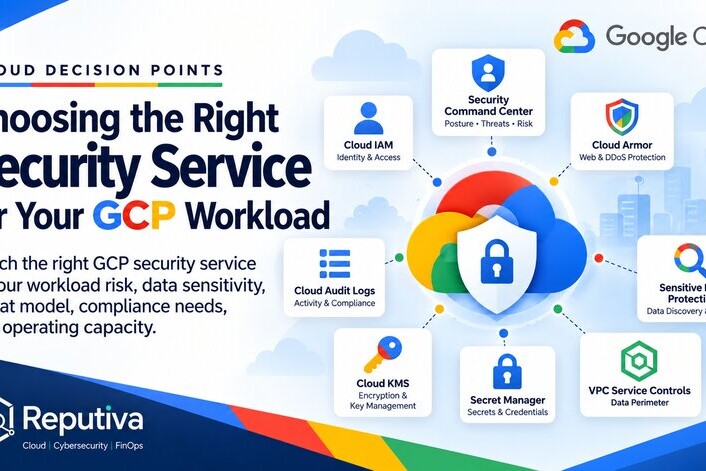
- Google Cloud Platform (GCP) organizes security around services such as Security Command Center, Cloud IAM, Cloud Armor, Cloud KMS, Secret Manager, Cloud Audit Logs, Organization Policy, VPC Service Controls, and Chronicle Security Operations.
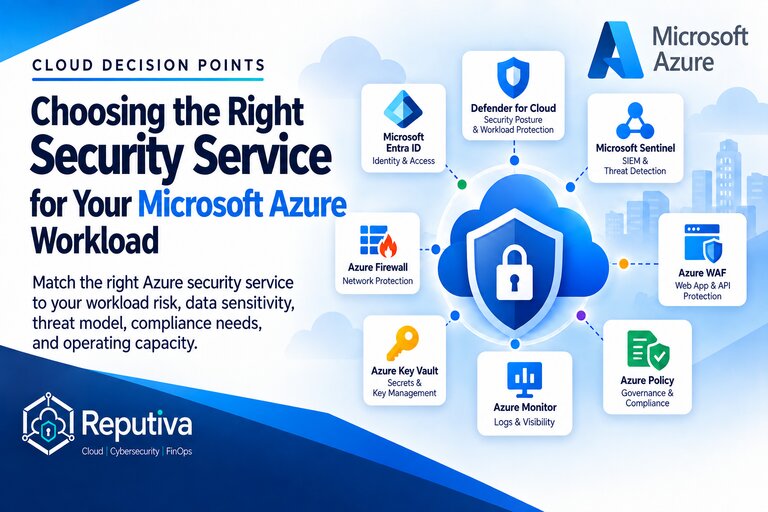
- Microsoft Azure centers security around Microsoft Entra ID, Defender for Cloud, Microsoft Sentinel, Azure Firewall, Azure Web Application Firewall, Key Vault, Azure Policy, Monitor, and Purview.
The key question is not:
Which cloud has the best security service?
The better question is:
What are you trying to protect, what risks matter most, and which security controls can your team actually configure, monitor, and maintain?
Side-by-side security service map
| Security need | AWS | Microsoft Azure | Google Cloud |
|---|---|---|---|
| Identity and access management | AWS IAM, IAM Identity Center | Microsoft Entra ID, Azure RBAC | Cloud IAM |
| Security posture management | AWS Security Hub CSPM | Microsoft Defender for Cloud | Security Command Center |
| Threat detection | Amazon GuardDuty | Microsoft Defender for Cloud, Microsoft Sentinel | Security Command Center threat detection |
| Vulnerability management | Amazon Inspector | Microsoft Defender Vulnerability Management / Defender for Cloud | Security Command Center and vulnerability findings |
| Web application protection | AWS WAF, AWS Shield | Azure Web Application Firewall, Azure DDoS Protection | Google Cloud Armor |
| Firewall and network protection | AWS Network Firewall, Security Groups, NACLs | Azure Firewall, NSGs | Cloud Firewall, Cloud Armor |
| Key management | AWS KMS, CloudHSM | Azure Key Vault, Managed HSM | Cloud KMS, Cloud HSM |
| Secrets management | AWS Secrets Manager | Azure Key Vault | Secret Manager |
| Logging and audit | AWS CloudTrail, CloudWatch Logs | Azure Monitor, Activity Logs, Microsoft Sentinel | Cloud Logging, Cloud Audit Logs |
| SIEM / security analytics | Amazon Security Lake, Security Hub integrations | Microsoft Sentinel | Security Command Center, Chronicle Security Operations |
| Compliance and governance | AWS Config, Audit Manager, Security Hub | Defender for Cloud, Azure Policy, Microsoft Purview | Security Command Center, Organization Policy, Assured Workloads |
1. Identity and Access Management
For SMEs, identity is usually the most important security control. Before investing in advanced threat detection or compliance tooling, organizations should make sure they have strong identity foundations:
- central user access management
- least privilege permissions
- multi-factor authentication
- role-based access control
- separation of admin and regular user accounts
- access reviews
- logging of privileged activity
On AWS, this usually starts with AWS IAM and IAM Identity Center. On Azure, it starts with Microsoft Entra ID and Azure RBAC. On Google Cloud, it starts with Cloud IAM.
2. Security posture management: know what is misconfigured
Cloud Security Posture Management (CSPM) is an automated security capability that continuously monitors cloud environments to identify misconfigurations, security risks, and compliance gaps. It provides centralized visibility across multi-cloud infrastructures (AWS, Azure, and GCP), helping organizations reduce the risk of data exposure and unauthorized access.
Cloud environments change quickly. New storage buckets, virtual machines, databases, service accounts, keys, and public endpoints can appear as teams build. That is why cloud security posture management matters.
- AWS Security Hub CSPM helps centralize and prioritize security issues across AWS accounts. Security Hub is a unified cloud security solution that correlates and enriches signals from sources such as posture management, Amazon Inspector, Amazon Macie, and Amazon GuardDuty.
- Microsoft Defender for Cloud (formerly Azure Security Center) provides cloud security posture management and workload protection across Azure, AWS, GCP, and hybrid environments, which can be helpful for organizations already using Microsoft security tooling.
- Google Security Command Center provides centralized visibility into risks across Google Cloud assets, with capabilities that can include posture management, threat detection, data security, compliance management, and AI security, depending on the tier.
Cloud Security posture management services help answer practical questions:
- Which resources are publicly exposed?
- Which workloads are missing security controls?
- Are storage buckets, databases, or keys misconfigured?
- Which findings should be fixed first?
- Are teams following baseline security policies?
3. Threat detection: detect suspicious activity early
Threat detection services help identify behaviour that may indicate compromise, abuse, or unauthorized access.
- On AWS, Amazon GuardDuty is commonly used for intelligent threat detection, while AWS Security Hub can correlate GuardDuty findings with other security signals.
- On Azure, Microsoft Defender for Cloud and Microsoft Sentinel are central to threat detection and security operations.
- On Google Cloud, Security Command Center provides threat detection and risk visibility for Google Cloud workloads.
4. Web and application protection: protect internet-facing workloads
Many SMEs expose websites, APIs, portals, and applications to the internet. These workloads need protection from common web attacks, abusive traffic, bots, and DDoS events.
- On AWS, the common services are AWS WAF and AWS Shield. AWS Shield is for protection against DDoS attacks, and AWS WAF is for protection of web applications from common web exploitation attacks.
- On Azure, Azure Web Application Firewall protects against common web application threats. Azure WAF provides centralized protection against threats such as OWASP Top 10 vulnerabilities, SQL injection, cross-site scripting, and bot attacks.
- On Google Cloud, Google Cloud Armor helps protect load-balanced applications against DDoS and web-based attacks.
5. Vulnerability management: find weaknesses before attackers do
Vulnerability management helps identify outdated software, exposed workloads, risky container images, and misconfigured resources.
- On AWS, Amazon Inspector scans workloads for software vulnerabilities and unintended network exposure.
- On Azure, vulnerability management is often handled through Microsoft Defender for Cloud and related Microsoft Defender capabilities.
- On Google Cloud, vulnerability findings can be surfaced through Security Command Center, depending on configuration and tier.
6. Key and secrets management: protect sensitive configuration
Key and secrets management is the secure storage, access control, and lifecycle tracking of digital credentials—such as API keys, passwords, database connection strings, and cryptographic keys—used by applications, services, and non-human identities. It prevents credential leaks and stops data breaches by replacing hardcoded values with runtime retrieval.
- AWS provides AWS Key Management Service, AWS CloudHSM, and AWS Secrets Manager.
- Azure provides Azure Key Vault and Managed HSM. Azure Key Vault is a cloud service for safeguarding encryption keys and secrets, such as certificates, connection strings, and passwords.
- Google Cloud provides Cloud KMS, Cloud HSM, and Secret Manager.
7. Logging and audit: make security activity visible
Logging and audit systems record secure, timestamped histories of computer events. They track user logins, data changes, and system errors.
- On AWS, AWS CloudTrail is central for auditing account activity, API calls, and user actions. AWS CloudTrail integrates with many AWS services, including GuardDuty, Inspector, KMS, Security Hub, and Shield
- On Azure, organizations typically use Azure Monitor, Activity Logs, Microsoft Defender for Cloud and Microsoft Sentinel
- On Google Cloud, organizations use Cloud Logging, Cloud Audit Logs, and Security Command Center integrations.
Practical selection guide for SMEs
Choose AWS security services when:
- Your workloads are primarily on AWS
- You want modular service-by-service security controls
- You need services such as GuardDuty, Security Hub, Inspector, WAF, Shield, KMS, and CloudTrail
- You are building multi-account AWS governance
- You want strong native AWS detection and response signals
AWS is often a strong fit when your team wants to build a layered AWS-native security model and is comfortable combining multiple specialized services.
Choose Azure security services when:
- Your organization already uses Microsoft 365, Entra ID, Defender, or Sentinel
- Your users and devices are already managed through Microsoft identity and security tools
- You want integrated security operations across cloud, identity, endpoint, and productivity environments
- You need hybrid or multi-cloud visibility through Defender for Cloud and Sentinel
Azure is often a strong fit for organizations that already operate within the Microsoft ecosystem and want cloud security integrated with identity, endpoint, email, collaboration, and SIEM workflows.
Choose Google Cloud security services when:
- Your workloads are primarily on Google Cloud
- You want centralized cloud risk visibility through Security Command Center
- You use Google Cloud data, analytics, AI, or container services
- You need strong native controls for Google Cloud environments
- You want cloud security integrated with Google Cloud logging, IAM, KMS, and network protection
Google Cloud is often a strong fit for SMEs, offering data, AI, Kubernetes, analytics, and modern application platforms.
Security services should match workload risk
For SMEs, the right cloud security service is not always the most advanced or expensive option. The better approach is to match security controls to workload risk.
AWS, Azure, and Google Cloud all offer strong security services. The practical difference is how those services fit your environment, your team, and your ability to operate them consistently.
For most organizations, the decision should not be based only on brand preference or service count. It should be based on workload type, internal skills, existing tools, compliance needs, budget, and operational maturity.
The right security service is the one your organization can configure properly, monitor consistently, and use to reduce business risk.
Ready to strengthen your cloud security foundation?
Book a Reputiva consultation to assess your cloud security posture, identify priority risks, and develop a practical roadmap to secure your AWS, Azure, or Google Cloud environment.

Reputiva
Reputiva is a cloud, cybersecurity, and FinOps advisory firm helping SMEs reduce cyber risk, strengthen cloud environments, and manage technology costs with confidence. We publish practical insights on cloud security, identity, AI risk, compliance, and digital transformation.