Choosing a cloud service provider is one decision. Choosing the right compute service within that provider is another. For SMEs, compute decisions affect far more than where an application runs. They shape cost, scalability, operational overhead, deployment speed, security, and long-term flexibility.
Should you use virtual machines, serverless functions, containers, managed app platforms, or Kubernetes? And how do AWS, Microsoft Azure, and Google Cloud Platform (GCP) compare?
This guide brings together the major compute options across the three hyperscalers and provides a practical side-by-side view for SMEs.
Why compute service selection matters
The wrong compute choice can lead to:
- Higher infrastructure and licensing costs
- More operational work than the team can handle
- Slower application delivery
- Poor scalability during traffic growth
- Security and patching gaps
- Difficulty modernizing later
The right choice depends on a few practical questions:
- How much control does the workload need?
- How much infrastructure management can the team handle?
- Is the workload VM-based, containerized, or event-driven?
- Does the application need Kubernetes?
- Is the workload long-running or short-lived?
- How should it scale over time?
For SMEs, the goal is not to choose the most advanced service. It is to choose the service that best matches the workload and the team’s operating capacity.
At a high level, all three cloud providers offer similar compute models:
- Virtual machines
- Managed app hosting
- Serverless functions
- Serverless containers
- Managed Kubernetes
- Batch processing
- Hybrid / edge options
The names differ, but the decision categories are broadly similar.
Side-by-side comparison of major CSP compute services
| Compute Need | AWS | Microsoft Azure | Google Cloud Platform |
|---|---|---|---|
| Virtual machines | Amazon EC2 | Azure Virtual Machines | Compute Engine |
| Scalable VM groups | EC2 Auto Scaling / related scaling patterns | Virtual Machine Scale Sets | Managed Instance Groups |
| Managed web apps / app platform | AWS Elastic Beanstalk / AWS App Runner | Azure App Service | App Engine / Cloud Run |
| Simple cloud hosting | Amazon Lightsail | Azure App Service or VMs, depending on need | App Engine or Cloud Run |
| Serverless functions | AWS Lambda | Azure Functions | Cloud Run functions |
| Serverless containers | AWS Fargate | Azure Container Apps | Cloud Run |
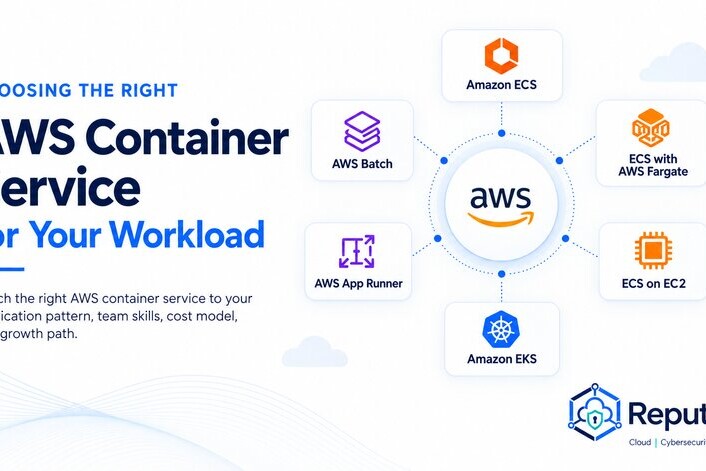
| Container orchestration | Amazon ECS | Azure Container Apps / AKS, depending on complexity | Cloud Run / GKE, depending on complexity |
| Managed Kubernetes | Amazon EKS | Azure Kubernetes Service (AKS) | Google Kubernetes Engine (GKE) |
| Lower-ops Kubernetes option | EKS with managed services, but still Kubernetes-heavy | AKS with managed control plane | GKE Autopilot |
| Simple container execution | Fargate / ECS tasks | Azure Container Instances | Cloud Run jobs or containerized task patterns |
| Batch processing | AWS Batch | Azure Batch | Cloud Run jobs / batch on GKE / VM-based batch |
| Hybrid / edge compute | AWS Outposts / Local Zones / Wavelength | Azure Arc / Azure Local | Google Distributed Cloud / edge-oriented options |
1. Virtual machines
Amazon EC2 vs Azure Virtual Machines (VMs) vs GCP Compute Engine
Amazon EC2
- Granular control & massive scale, Widest catalogue (hundreds of types), Pre-configured sizes only, Per-second (Linux) or per-hour, Savings Plans / Reserved Instances
Azure Virtual Machines (VMs)
- Microsoft enterprise integration, Vast, grouped by series letters, Pre-configured sizes only, Per-minute primarily, Hybrid Benefit / Reserved Instances
GCP Compute Engine
- Custom sizing & AI/Data workloads, Simplified families with custom tuning, Fully custom CPU & RAM allocation, Per-second for all VM instances, Sustained Use Discounts (Automatic)
Serverless functions
AWS Lambda vs Azure Function vs GCP Cloud Run Functions
AWS: AWS Lambda
Best for event-driven functions, lightweight APIs, file processing, and scheduled jobs.
Azure: Azure Functions
Azure’s equivalent for event-driven compute and automation. Ideal for .NET-centric applications
GCP: Cloud Run functions
Useful for event-driven tasks and function-based application logic.
Serverless containers
AWS Fargate vs Azure Container Apps vs GCP Cloud Run
AWS: AWS Fargate
Let’s you run containers without managing servers. Wrapper for Amazon ECS or Amazon EKS
Azure: Azure Container Apps
A strong option for serverless containers, APIs, and microservices. Ideal for microservice meshes and event-driven architectures. Built on KEDA, Dapr and Kubernetes.
GCP: Cloud Run
Ease of use and best for request-driven web apps. Built on Knative.
Managed Kubernetes
AWS: Amazon EKS
Managed Kubernetes on AWS.
Azure: Azure Kubernetes Service (AKS)
Managed Kubernetes on Azure.
GCP: Google Kubernetes Engine (GKE)
Managed Kubernetes on GCP, with GKE Autopilot providing a lower-ops option.
Batch and task-based processing
AWS: AWS Batch
Purpose-built for batch jobs and large-scale compute tasks.
Azure: Azure Batch
Designed for parallel jobs, rendering, processing, and scheduled compute-heavy tasks.
GCP: Cloud Run jobs/batch patterns
GCP supports task-based execution through Cloud Run jobs and other batch-oriented compute patterns.
Common mistakes SMEs make with compute services
- Choosing virtual machines by default
Not every workload needs full server control. - Using Kubernetes too early
Many SMEs adopt Kubernetes before they have the team, scale, or use case for it. - Choosing based on familiarity only
A familiar service is not always the right service. - Ignoring operational capacity
The right compute service should match what the team can operate securely and reliably. - Separating compute from cost planning
Compute decisions directly affect utilization, autoscaling, idle capacity, and long-term cost. - Not planning for modernization
A practical starting point today may not be the right end-state tomorrow.
Compute choices should match the operating model
For SMEs, the best compute decision is rarely about choosing the “most powerful” service.
It is about choosing the service that matches:
- The workload
- The delivery model
- The team’s skill level
- The expected growth pattern
- The security and compliance requirements
- The long-term cost profile
In many cases, SMEs should favour managed and lower-ops services before jumping into high-control, high-complexity platforms.
That may mean:
- App Runner, App Service, or Cloud Run before VMs
- Fargate, Azure Container Apps, or Cloud Run before Kubernetes
- Lambda, Functions, or Cloud Run functions for event-driven logic
- VMs only when real infrastructure control is needed
Practical next step
Before choosing a compute service across AWS, Azure, or GCP, create a simple workload profile:
- Application type
- Runtime model
- Traffic pattern
- Scaling needs
- Container requirement
- Kubernetes requirement
- Security requirements
- Team skill level
- Operational capacity
- Cost sensitivity
- Modernization roadmap
That profile will make it much easier to choose the right compute path.
Need help choosing the right cloud compute service?
Reputiva helps organizations assess, secure, modernize, and optimize cloud environments across AWS, Azure, and GCP.
Book a consultation with Reputiva to assess your cloud readiness, compute strategy, security posture, or modernization roadmap.

Reputiva
Reputiva is a cloud, cybersecurity, and FinOps advisory firm helping SMEs reduce cyber risk, strengthen cloud environments, and manage technology costs with confidence. We publish practical insights on cloud security, identity, AI risk, compliance, and digital transformation.