In the Businesses at Work 2025 Report, Okta, the cloud-based identity and access management (IAM) company, analyzed global customer app trends for over a decade. From smartphone saturation to global remote work and cloud-first operations, organizations today operate in an environment that is more connected and more complex than ever before.
Today, the average organization runs over 100 applications—and each introduces a new identity, a new access point, and a new risk.
Key Insights
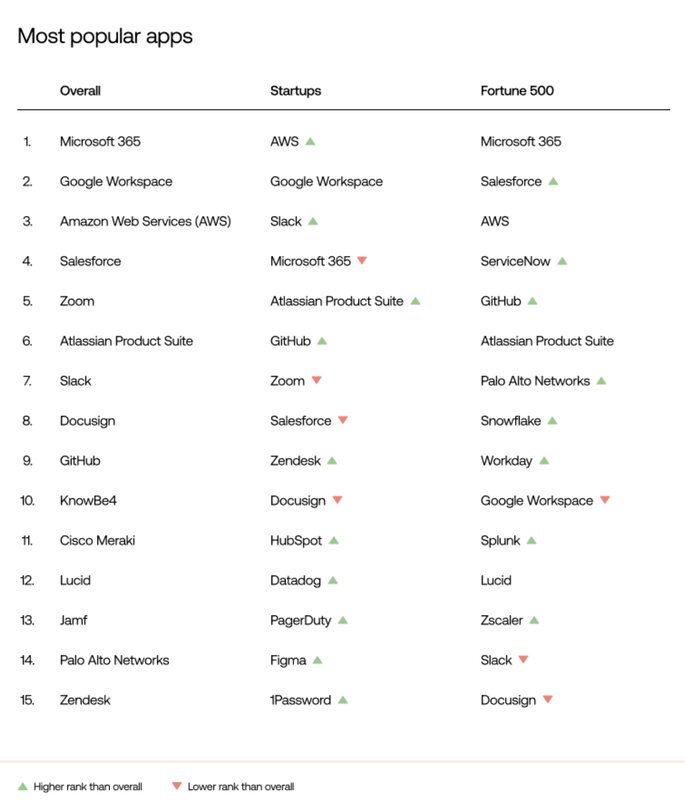
- Security and collaboration apps make up 60% of our most popular apps
- Emerging from a stagnation streak, the average number of apps per customer hits 101
- Detected threats are up across the board, with the most-attacked industry experiencing a tenfold increase
- Organizations are adopting higher-assurance authentication factors and biometrics
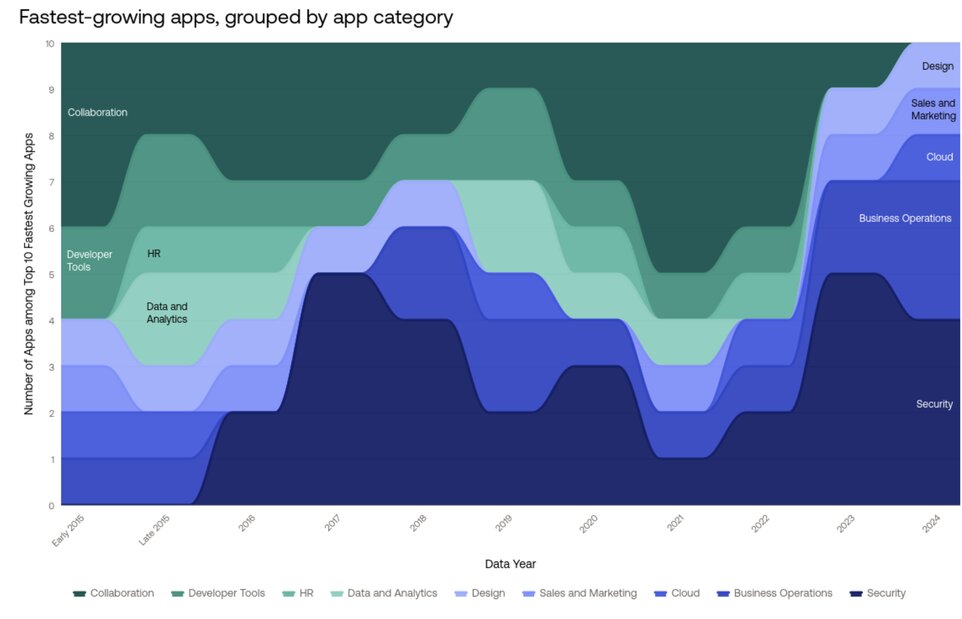
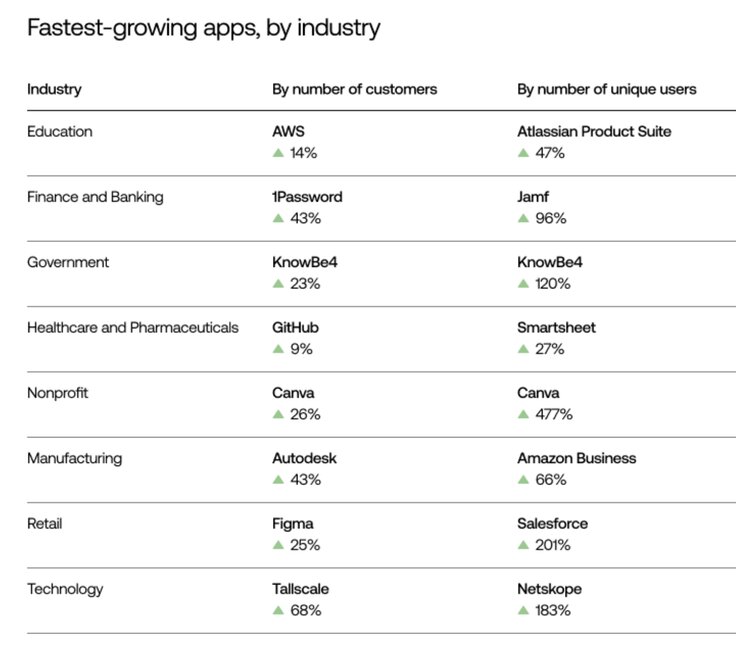
Security apps dominate the fastest-growing apps again after several years in which collaboration apps took the lead. In fact, the three fastest-growing apps this year are security-focused.
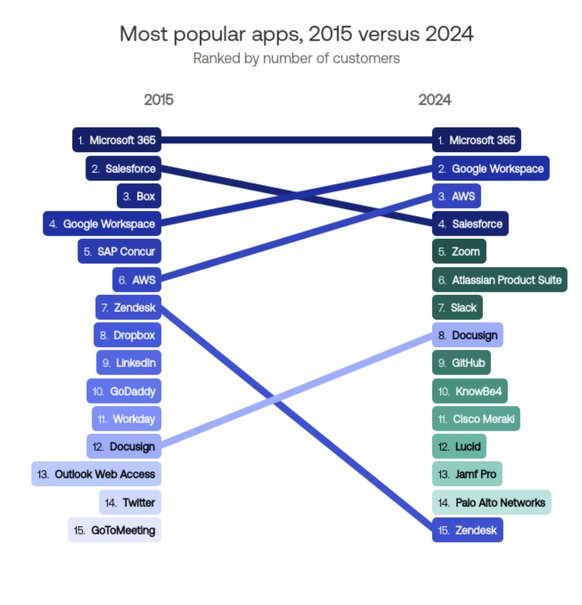
Security, collaboration, and cloud platforms have soared
This year, security and collaboration tools make up a whopping 60% of the most popular apps list (which ranks apps based on the number of customers deploying them). It wasn’t always this way. While collaboration has been a constant presence since the start, security didn’t make it to our apps’ honour roll until 2020.
Top Apps
Collaboration Tools
Tools supporting collaboration (think video conferencing, e-signatures, messaging, and design and content collaboration) currently make up 40% of our most popular apps.
Security gains ground
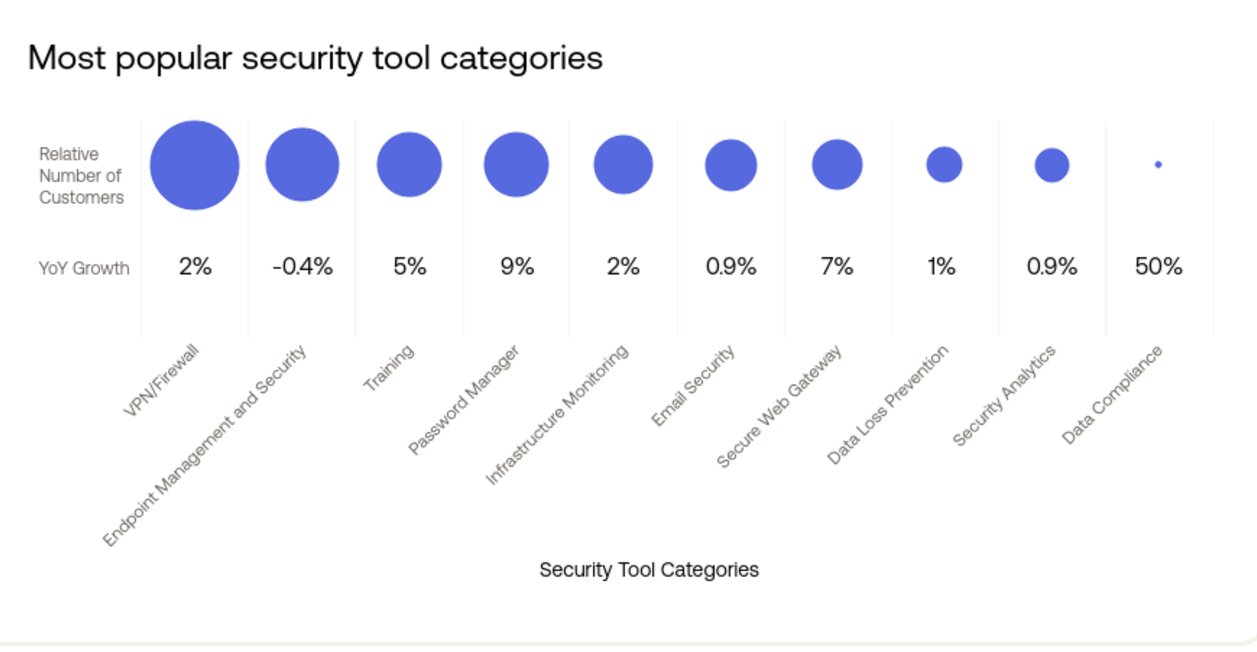
Today, 20% of the top-ranked apps are security-focused. These tools joined the most popular apps list for the first time in 2020 with KnowBe4. Jamf entered in 2022. Palo Alto Networks followed suit in 2024.
Big business = more apps:
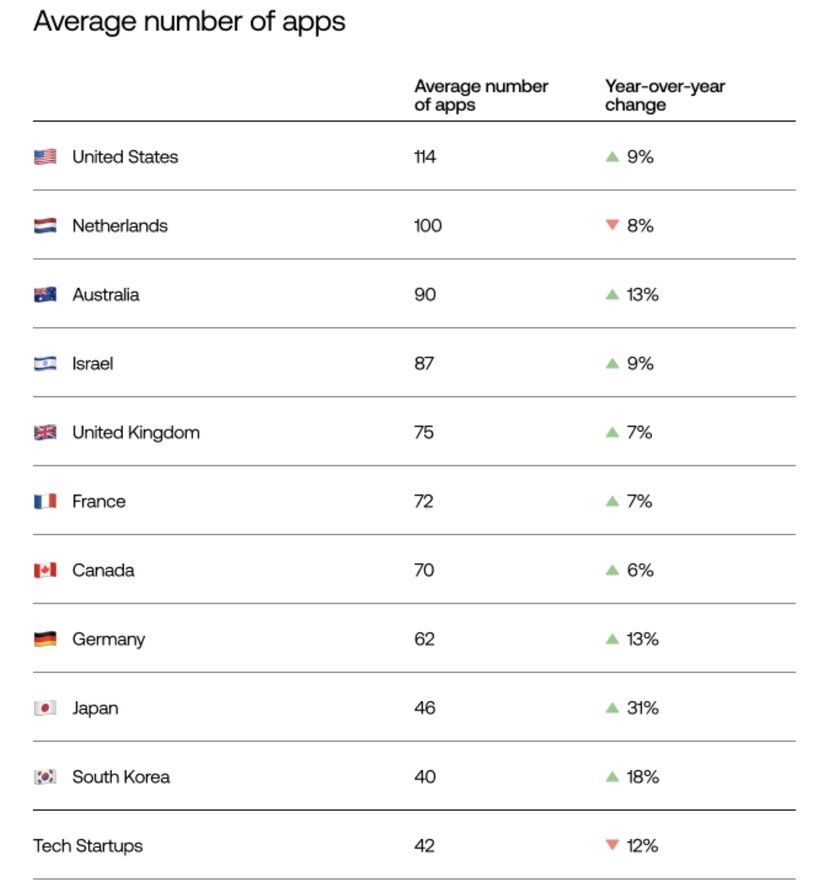
Companies with 2,000 or more employees deploy an average of 247 apps, while those with fewer than 2,000 deploy just 71. Tech startups deploy just 42 apps each.
Collaboration is King
Collaboration is king: Startups understand they can’t succeed if their employees aren’t communicating and collaborating, and 54% of tech startups run Slack right alongside Microsoft 365 — the home of Teams. For perspective, only 40% of companies overall deploy that duo.
IPSIE: A unified identity security standard
The average number of apps deployed per company finally topped 100 this year. For security teams, this means an even larger attack surface to defend. But what if those apps all adhered to a single security standard?
Interoperability Profiling for Secure Identity in the Enterprise (IPSIE)
The goal of IPSIE is to be a universal standard for identity security that would apply to every enterprise app. This would allow developers to embed identity security directly into their apps,giving customers more effective cybersecurity outcomes, especially around end-to-end visibility and remediation.
Conclusiion
The future of business is not just cloud-first, it is identity-first. With passwordless authentication on the rise, biometric factors gaining traction, and Zero Trust becoming the standard, organizations are entering a new era of security. The real challenge isn’t technology.
It’s controlling who has access to what in an environment with 100+ apps and growing.
Managing security across 100+ apps doesn’t have to be complex.
Reputiva helps organizations secure identities across AWS, Azure, and GCP by implementing Zero Trust, access controls, and identity governance to reduce risk and simplify operations.
Book a consultation