
The Google Cloud AI Agent Trends 2026 Report: Five shifts that will redefine roles, workflows and business value in 2026, highlights a major transition from basic generative AI to agentic systems capable of independently planning and executing complex tasks. By 2026, business value will center on integrated workflows in which every employee serves as a strategic supervisor, orchestrating specialized digital assistants to handle repetitive tasks. These autonomous agents will revolutionize sectors such as marketing, security, and customer service by connecting previously isolated data through standardized protocols.
The shift towards intent-based computing allows workers to focus on high-impact creativity while AI manages the technical mechanics of the modern enterprise. Ultimately, the report emphasizes that successful adoption requires cultural transformation and a commitment to upskilling human talent to lead these new digital assembly lines.
The shift to Agentic AI
This is AI that moves beyond answering questions to understanding a goal, making a plan, and taking actions across applications to achieve it with extensive human guidance and oversight.
Agents are systems that combine the intelligence of advanced AI models with access to tools so they can take actions on your behalf, under your control. – I/O, May 2025 Keynote by Sundar Pichai, CEO, Google
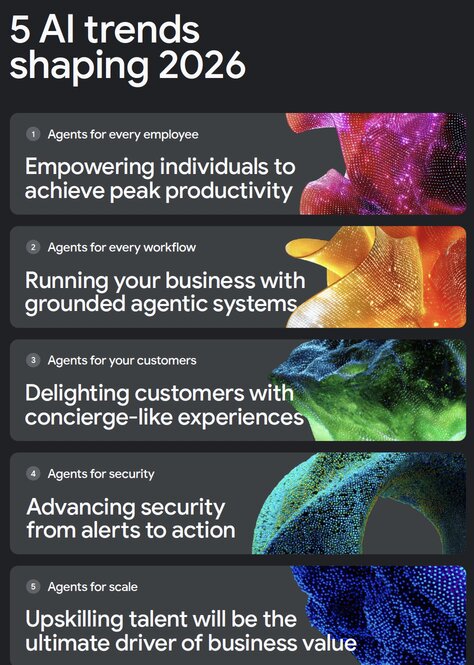
The five agentic AI trends shaping 2026:
- Agents for every employee
Empowering individuals to achieve peak productivity - Agents for every workflow
Running your business with grounded agentic systems - Agents for your customers
Delighting customers with concierge-like experiences - Agents for security
Advancing security from alerts to action - Agents for scale
Upskilling talent will be the ultimate driver of business value
- Agents for every employee (Employee-centric transformation)
Empowering individuals to achieve peak productivity
This new agentic model is designed to expand the potential of every individual, turning them into the primary engine for innovation and growth. This change stems from a behavioural shift in the human-computer interface, moving from instruction-based computing (e.g., analyzing a spreadsheet, developing code) to intent-based computing.
In 2026, employees will increasingly be able to state a desired outcome, and the computer—using LLMs and agents will determine how to deliver it.
Intent-based computing is an emerging, advanced paradigm in IT infrastructure management where systems are designed to understand, translate, and execute the high-level business goals—or “intents”—of human administrators, rather than requiring manual, step-by-step technical configuration.
In this new model, every employee—from an entry-level analyst to a senior vice president—becomes a human supervisor of agents.
Their primary job is no longer to perform every mundane task personally, but rather to orchestrate a team of specialized AI agents to achieve a goal. This model is about more than just delegation; it’s about augmentation. The real power comes from giving every employee agents grounded in the company’s own enterprise context—its internal systems, knowledge bases, customer data, and past work—to elevate the impact of their efforts.
The employee’s core function becomes providing strategic direction. Their new responsibilities are to:
Delegate mundane or repetitive tasks
Identify which tasks are best suited for an agent and assign them.
Set goals
Clearly define the desired outcome for the agent.
Outline strategy
Use their human judgment to guide the agents and make the final, nuanced decisions that AI can’t.
Verify quality
Act as the final checkpoint for quality,
Trend #2: Agents for every workflow
Running your business with grounded agentic systems
An agentic system is a digital assembly line—a human-guided, multi-step workflow that orchestrates multiple agents to run a business process end to end.
Digital assembly line: Orchestrating agentic systems
A digital assembly line is made possible by the Agent2Agent (A2A) protocol. This open standard enables seamless integration and orchestration between AI agents, allowing them to work together even if they are from different developers, built on different frameworks, or owned by different organizations.
While LLMs are the “brains” of these agents, they have two major limitations: their knowledge is frozen at the time of their training, and they can’t interact with the outside world to access real-time data or perform actions by different organizations.
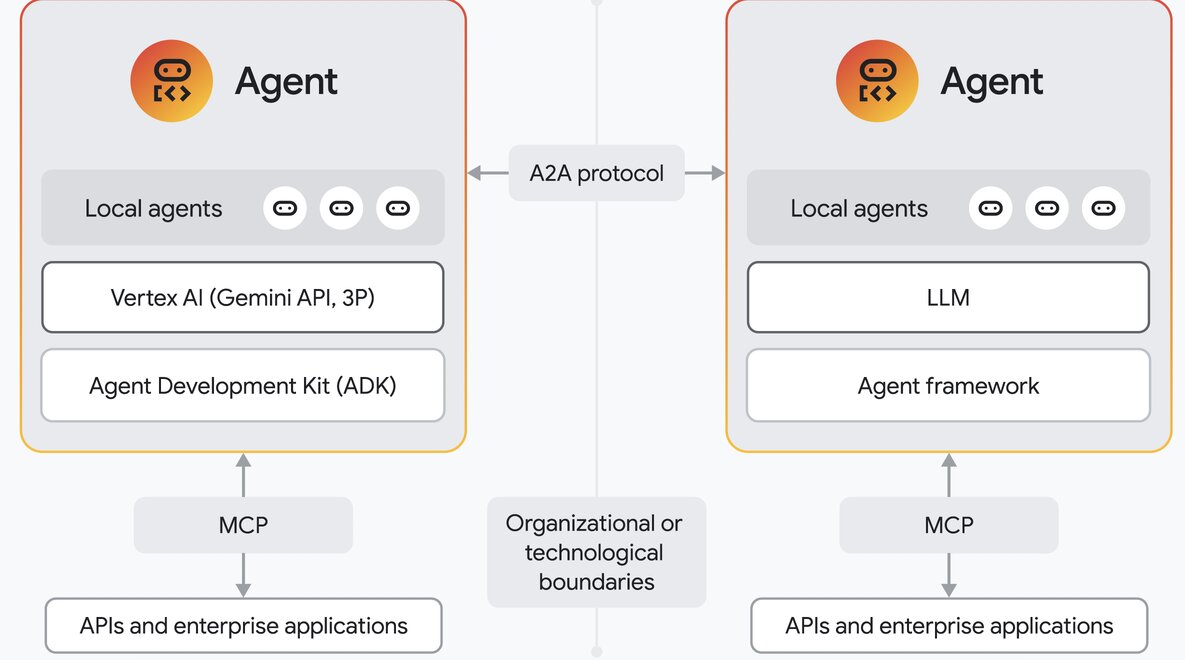
The Model Context Protocol (MCP) solves this. It creates a standardized, two-way connection for AI applications, allowing LLMs to easily connect with various data sources and tools, such as managed databases (e.g., Cloud SQL, Spanner) and data platforms (e.g., BigQuery).
Trend #3: Agents for your customers
Delighting customers with concierge-like experiences
For the last decade, customer service automation meant pre-programmed chatbots answering simple questions and deflecting support tickets. They were efficient, but they lacked the ability to understand more nuanced and complex questions.
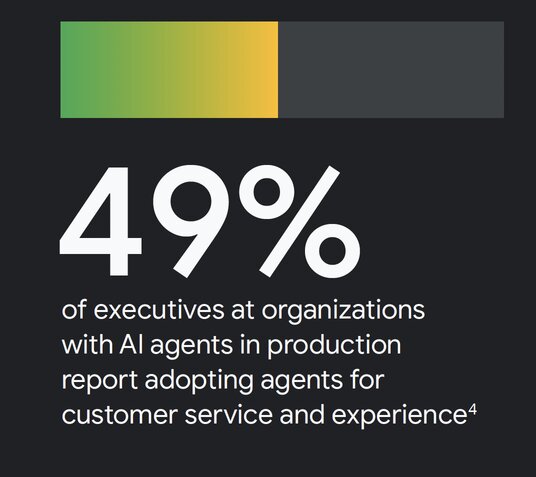
With advances in LLMs and A2A, 2026 will deliver more helpful concierge-style agents. These AI agents will connect enterprises and customers by remembering preferences and past conversations to offer truly one-to-one experiences.
The Agentic Concierge
An agentic concierge doesn’t wait for a complaint. It monitors systems for triggers and resolves problems using real-time data to provide insights and take actions with human guidance and oversight.
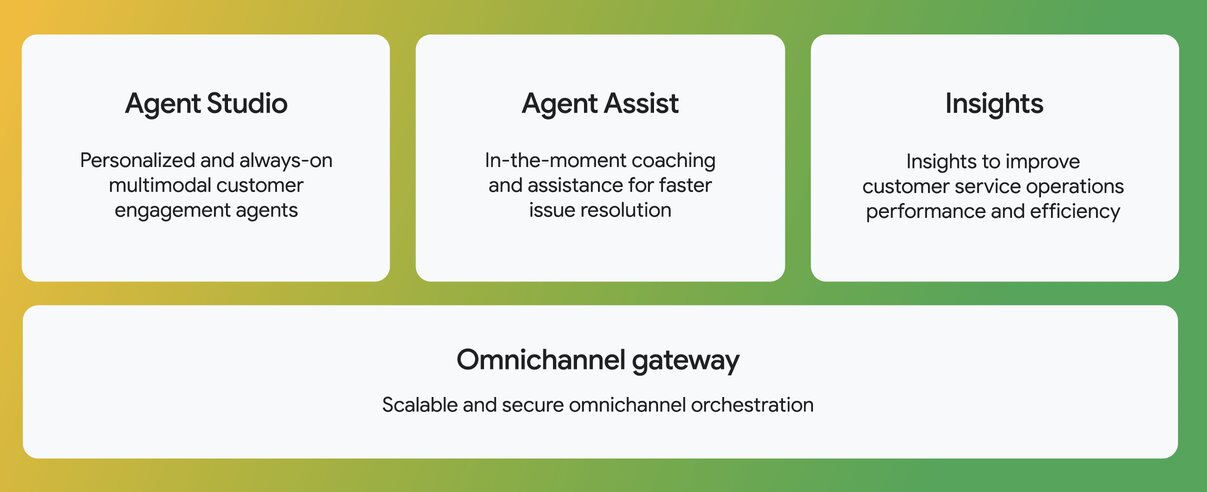
Trend #4: Agents for security
Advancing security from alerts to action
In a modern security operations center (SOC), human analysts face a constant stream of data and alerts, and 82% are concerned or very concerned that they may be missing real threats or incidents due to the volume of alerts and data they face. This “alert fatigue” is the attacker’s greatest advantage; they only need to be right once, while the defender has to be right every single time.
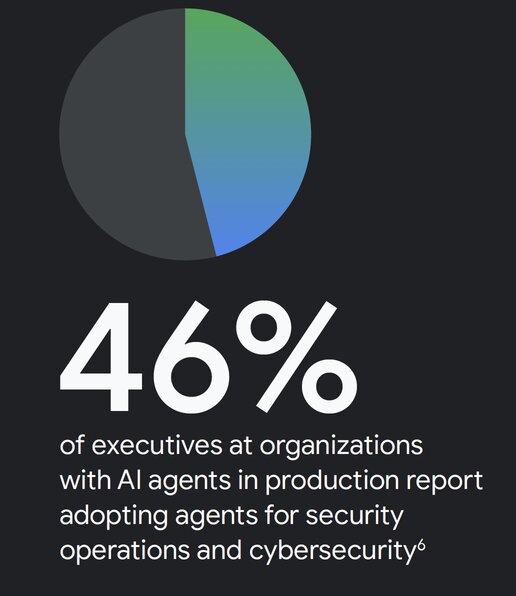
While security orchestration, automation, and remediation (SOAR) solutions deliver some automation, they may offer only incremental benefits. But with their ability to reason, act, observe, and adjust actions based on new information, AI agents have the potential to help security teams identify and respond to threats more effectively.
In 2026, AI agents will increasingly help with tasks like vulnerability discovery as well as alert triage and investigation.
The Agentic SOC
An agentic SOC orchestrates a system of task-based AI agents, each with a specific role, to achieve a common security outcome. After receiving a security alert, the agentic SOC cycles through a process, engaging various agents:
This dynamic process of evaluating, acting, and re-evaluating enables the system to adapt to a changing security environment in real time, while freeing up time for human analysts to focus on higher-value work.
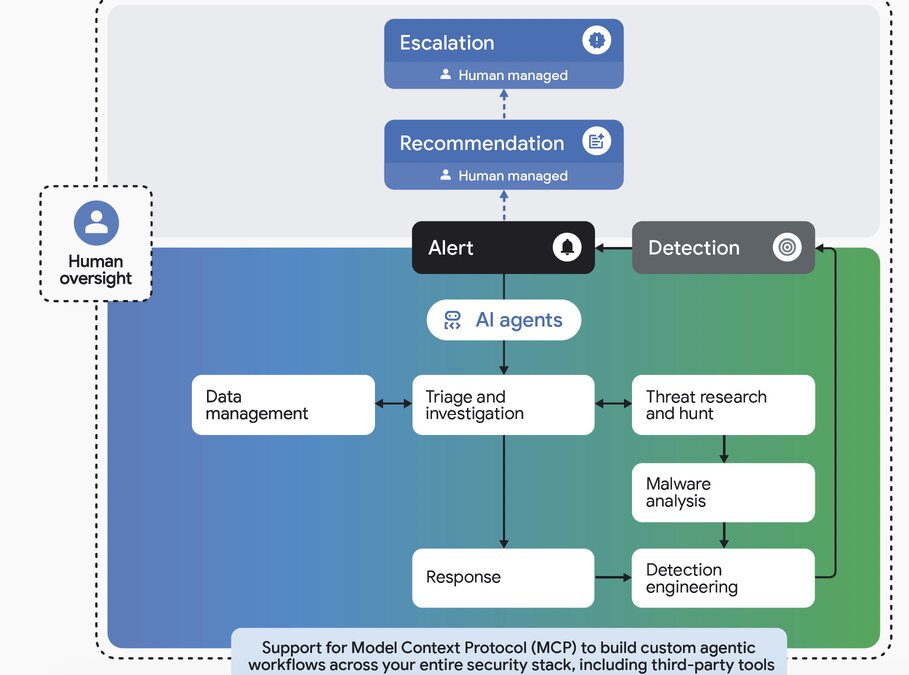
Multiple SOC agents need a common enterprise context and can share the same security data sources (e.g., security telemetry data), regularly communicate, and adapt their actions through technologies like A2A and MCP. Agents should also be trained on continuously evolving real-world insights from security experts.
Trend #5: Agents for Scale
Upskilling talent will be the ultimate driver of business value
It is tempting to focus on the technology—the models, the platforms, and prompts—but this misses the most critical element: the people. As AI evolves, the skills gap is widening, making it harder for individuals and organizations to keep up. Skills themselves expire faster than ever: The “half-life” of a professional skill is now four years—and in tech, as short as two years.
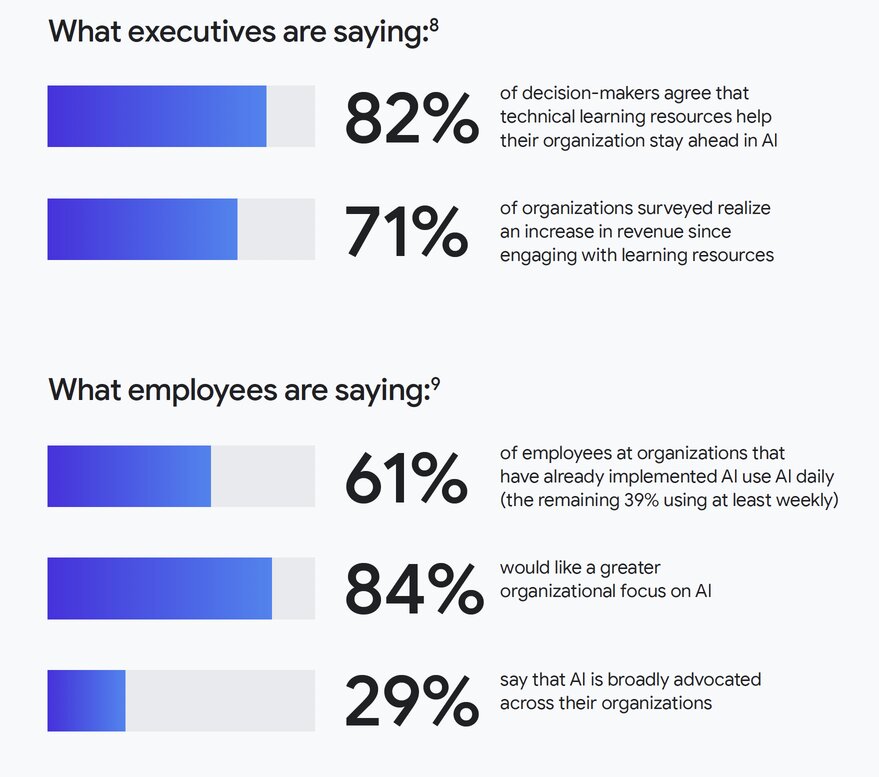
Both practitioners and decision-makers see the importance of closing this gap. Skills increase the ability to get hired, get promoted, and grow careers—plus, they have a positive impact on productivity, innovation, and revenue.
From AI Adoption to AI Control: The Real Challenge Ahead
The shift to agentic AI is not just another technology upgrade; it’s a fundamental redesign of how organizations operate.
From employees becoming orchestrators of AI agents to entire workflows running autonomously, businesses are entering a new era where:
- Productivity is amplified
- Decisions are accelerated
- Security becomes more critical than ever
As the report highlights, organizations that succeed won’t just adopt AI; they will rethink roles, workflows, and governance to manage it effectively. The real opportunity is not just in deploying AI agents but in controlling, securing, and aligning them with business outcomes.
AI Agents Are the Future, Security Must Be Built In
AI agents are powerful, but without proper controls, they introduce:
- Identity risks
- Data exposure
- Unauthorized actions across systems
At Reputiva, we help organizations:
- Secure AI agents across AWS, Azure, and GCP
- Implement Zero Trust for AI-driven workflows
- Control identity, permissions, and data access


