Identity security is entering a defining era. According to the 2026 ManageEndine PAM360 Identity Security Outlook Report, organizations are facing three converging pressures:
- the explosive rise of non-human identities,
- growing operational complexity across fragmented IAM environments,
- and increasing expectations around AI-driven security operations.
Identity security will be shaped by three forces: the relentless growth of non-human identities that demand governance at scale, the natural progression into unified IAM operations, and the measured implementation of artificial intelligence (AI) to augment and complement what security teams can accomplish.
The report, based on responses from 515 senior security and identity professionals across the United States and Canada, reveals a major shift in how organizations approach identity security. The report captures the strategic thinking of leaders who control identity security budgets and set organizational direction.
The report’s other key insights include:
- Machine identities now outnumber human identities by ratios as high as 500:1 in some industries, while only 12% of organizations report having comprehensive automated lifecycle management for these identities.
- The explosion of service accounts, API keys, bots, certificates, and AI agents is forcing organizations to rethink traditional identity governance models built around human users.
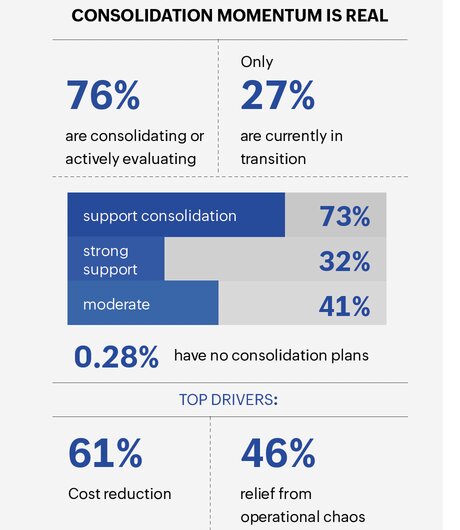
- 76% of organizations are actively consolidating or evaluating identity vendor consolidation,
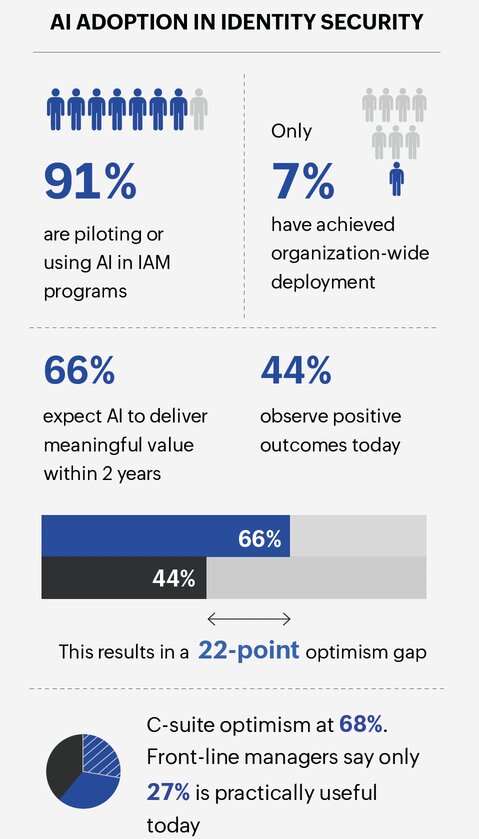
- 91% are piloting or using AI in identity operations,
- Organizations are aggressively exploring AI, Zero Trust, and IAM consolidation strategies to reduce operational strain and modernize identity governance.
89% of organizations now manage machine-to-human identity ratios of at least 25:1, while nearly half exceed 100:1.
The reports’ core theme:
Identity security is no longer just an IT function; it is becoming foundational to business resilience, operational continuity, and long-term digital transformation.
The Key Takeaways
The Non-Human Identity Explosion
North American enterprises now manage at least 100 times more machine identities than human identities. With some sectors reaching a 500:1 ratio, this astronomical rise signals that the next wave of identity security will be defined by NHIs, not humans.
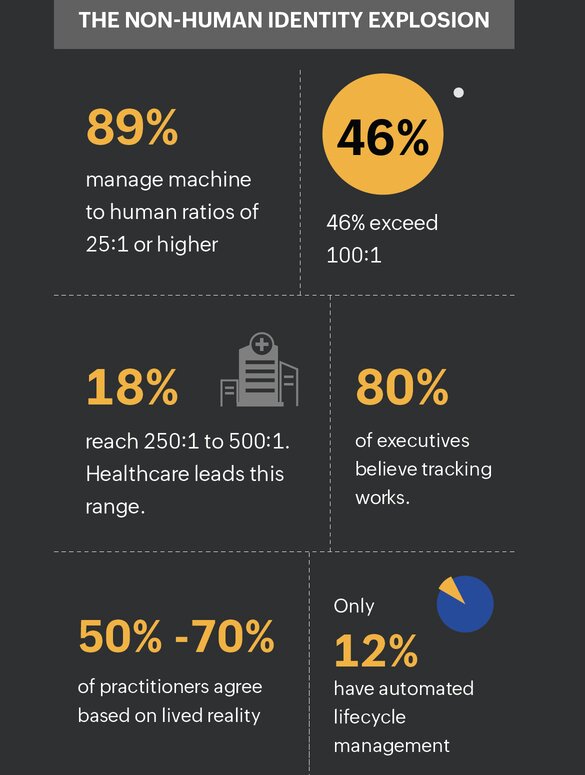
Machine identities, such as service accounts, API keys, bots, agents and certificates, have proliferated as organizations embrace automation, cloud services, and DevOps practices
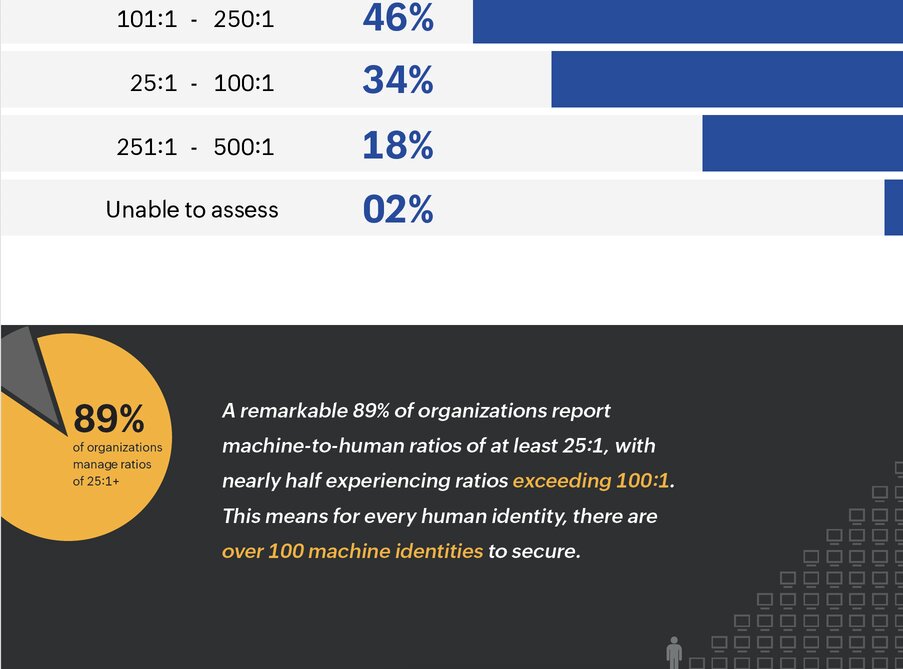
The visibility paradox: Dissonance between leadership perception and operational reality
The visibility gap stems from multiple sources: legacy systems lacking modern integration capabilities, decentralized IT environments resulting from mergers and acquisitions, and the sheer velocity of NHI creation outpacing governance processes.
The survey data suggests organizations should consider life cycle controls when:
- Orphaned/dormant accounts exceed 25% of total machine identities
- Machine-to-Machine ratios surpass 100:1 without commensurate automation in life cycle management
- More than 25% of the IAM team’s time is spent on integration maintenance rather than security operations.
Only 12% of organizations have achieved comprehensive automated life-cycle management for machine identities. The remaining 88% rely on manual or ad-hoc processes that cannot scale with a 100:1 ratio. This creates a mounting inventory of unmonitored attack vectors: each orphaned service account and each forgotten API key representing a potential breach pathway.
The future division of labor
AI in identity security: More promise than proof.
While 91% of organizations are piloting or using AI in IAM operations, only 71% have achieved organization-wide deployment. A 22-point optimism gap exists between future expectations (nearly 66% of AI users are confident about AI’s future value) and current outcomes (almost 44% of AI users are seeing positive outcomes now).
The Identity security stack is fragmented by design
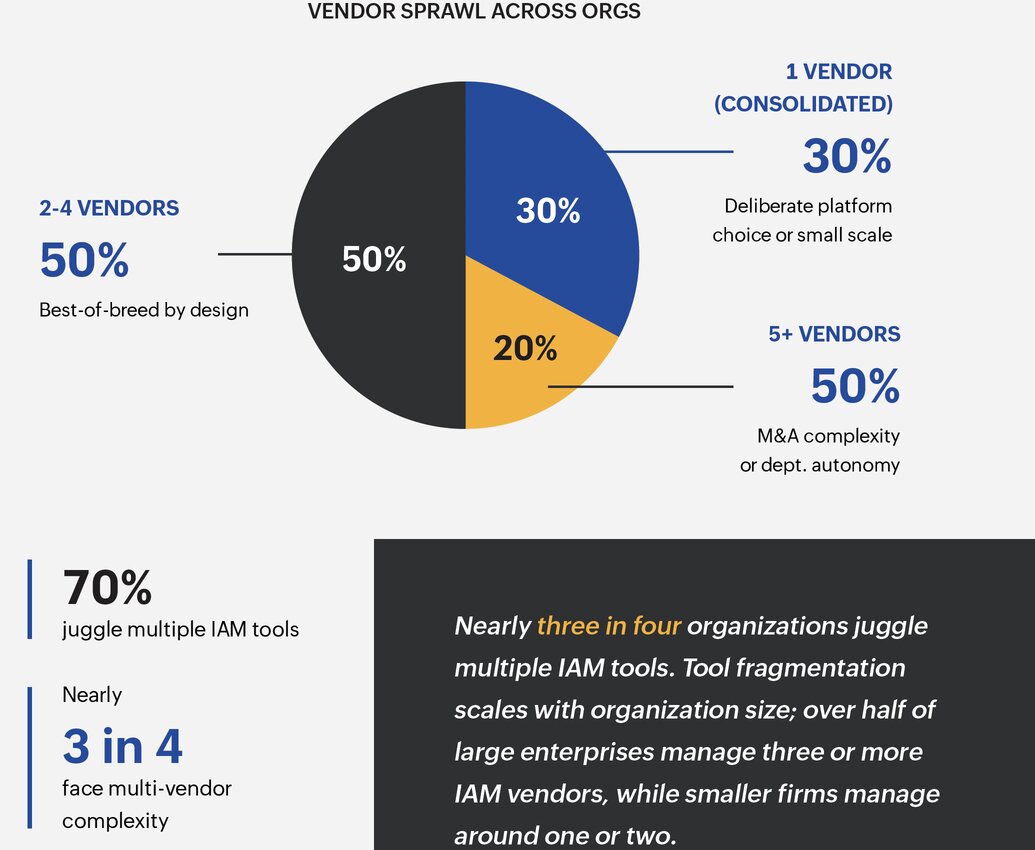
Nearly three in four organizations operate with multiple IAM vendors, and one in three spend more time managing vendors than managing privileged users. Complexities spike early, not gradually.
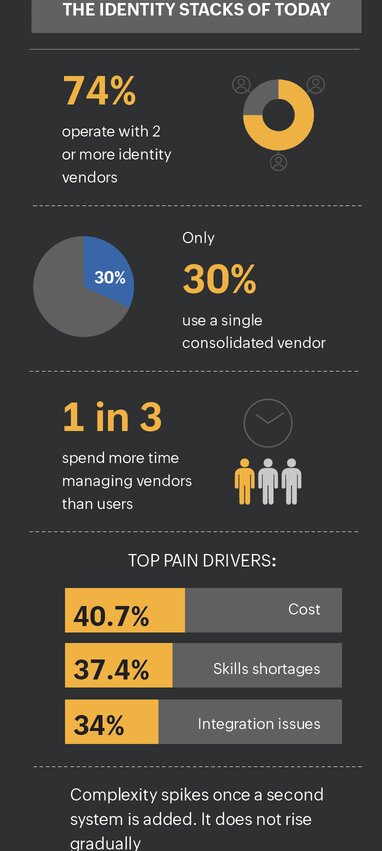
Tool sprawl often begins as a mature recognition of distinct requirements but becomes architectural indecision when organizations lose sight of integration costs. The initial tools make sense. Somewhere between tools three and six, the architecture crosses a threshold where complexity overwhelms capability, but organizations lack clear governance to recognize or act on this transition.
Complexity doesn’t scale gradually; it spikes early
Consolidation is no longer a debate
76% of North American firms are either consolidating or evaluating vendor unification. Resistance is virtually non-existent. The question has shifted from “should we?” to “How quickly can we execute?”
Budgets are recalibrating, not shrinking
Over 92% of respondents expect identity security budgets to grow or remain stable. Among the minority anticipating cuts, 60% attribute them to consolidation efficiencies and strategic optimization.
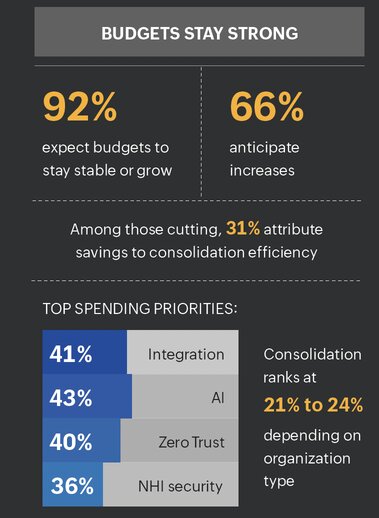
The 2026 Outlook
Organizations in 2026 are aiming for consolidation to achieve unified control, and for AI to ensure continuity and modernization. The most defining force shaping identity security isn’t AI; it’s the shortage of skilled practitioners needed to manage increasingly complex ecosystems.
The Future of Cybersecurity is Identity-Centric
At Reputiva, we believe the findings in the Identity Security Outlook 2026 report reflect a major shift already happening across modern cloud and enterprise environments. Organizations are no longer managing identity security only for employees and contractors. They are now securing:
- service accounts,
- APIs,
- bots,
- AI agents,
- cloud workloads,
- certificates,
- and machine identities operating across AWS, Azure, and GCP environments.
As machine identities continue to outnumber human users, traditional manual IAM processes cannot scale effectively. The report also reinforces an important reality:
Many organizations are struggling not because they lack security tools, but because they are overwhelmed by operational complexity, fragmented IAM architectures, and limited security resources.
From non-human identities and AI adoption to IAM fragmentation and operational fatigue, organizations need modern identity strategies that scale securely across cloud, SaaS, and hybrid environments. The future of cybersecurity will increasingly depend on an organization’s ability to simplify identity operations, automate governance, and secure both human and non-human identities at scale.
At Reputiva, we help organizations modernize identity and cloud security through:
- identity governance strategy,
- Microsoft 365 and Google Workspace security,
- privileged access management,
- cloud security architecture,
- Zero Trust implementation,
- IAM modernization,
- and AI-aware cybersecurity advisory services across AWS, Azure, and GCP.
Book a Cloud Strategy & Security Assessment with Reputiva today to evaluate your identity security posture and prepare for the next generation of identity-driven cybersecurity challenges.