Cloud computing has transformed how organizations build, scale, and deliver digital services. But as cloud environments become more interconnected and artificial intelligence becomes embedded across applications, infrastructure, and security operations, the cloud threat landscape is evolving just as quickly.
The Cloud Security Alliance (CSA) Top Threats to Cloud Computing 2026 report highlights how traditional cloud security challenges are converging with a new generation of AI-enabled risks. Attackers can increasingly use AI to accelerate vulnerability discovery, develop malware, automate reconnaissance, and operate at a speed that traditional security processes may struggle to match.
The Top Threats to Cloud Computing Survey Report 2026 show a decisive change in cloud security priorities. Identity, artificial intelligence, third-party resources, and APIs now dominate the cloud threat landscape, while traditional infrastructure concerns continue to decline in relative importance.
The difference in 2026 is the speed and scale at which those weaknesses can potentially be discovered and exploited. The report, therefore, points toward an important shift in cloud security: organizations need to move beyond protecting individual cloud resources and build security, governance, identity, resilience, and continuous verification into the architecture itself.
The most notable development in the 2026 results was the emergence of AI as both an enabler of attacks and a target.
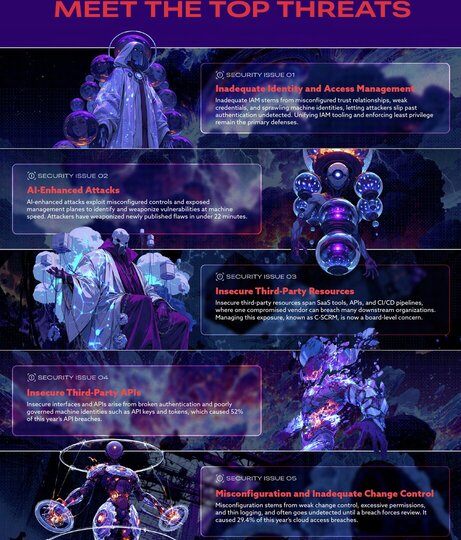
The Top 11 Threats to Cloud Computing in 2026.
Security Issue #1: Inadequate Identity and Access Management
Identity & Access Management (IAM) ensures only authorized users can access the resources they need by proving who or what they claim to be. IAM is pivotal in defining and managing user roles, access privileges, and the conditions under which these privileges are granted or revoked.
Key components, including user authentication, authorization, Single Sign-On (SSO), Multi-Factor Authentication (MFA), and activity monitoring, are integral to IAM’s effectiveness. However, the intricacies and dynamism of these features can introduce vulnerabilities, especially if not implemented, configured, updated, or monitored correctly.
Security Issue #2: AI-Enhanced Attacks
Cloud environments are particularly attractive targets for AI-enhanced attacks. A shared responsibility model between cloud provider and cloud users creates ambiguity over security ownership: organizations routinely misconfigure controls within their scope, creating opportunities for AI to immediately identify vulnerabilities, misconfigurations, and improperly secured controls and then exploit them.
The multi-tenant architecture of public cloud platforms means that a single compromised hypervisor layer, container runtime, or virtualization host can affect workloads belonging to multiple unrelated organizations, amplifying the potential impact of a single intrusion and giving rapid AI attacks greater cross-tenant impact.
Security Issue #3: Insecure Third-Party Resources
Software supply chain exposure is now a dominant cloud security issue, including multiple NPM attacks. The term “third-party resource” has broadened its meaning well beyond externally authored code and open-source libraries. It now encompasses SaaS dependencies, managed APIs, CI/CD pipelines, container-based images, and AI-generated components.
A cloud product is the sum of all its components, which means a compromise might originate in any of them. A single transitive dependency, a tampered build step, or a hijacked maintainer account several tiers upstream can all affect third-party resources and compromise the first-party resource that depends on them.
Adversaries exploit this asymmetry deliberately: they need not breach the hardened primary target, only the weakest link in its dependency graph. That link is frequently from a small, under-resourced supplier whose output is nonetheless implicitly trusted and executed across many downstream estates.
Security Issue #4: Insecure Interfaces and APIs
Cloud Service Providers (CSPs), enterprise vendors, and internal developers expose machine-to- machine Application Programming Interfaces (APIs) and human-facing User Interfaces (UIs) that serve as the primary control plane for cloud services. These interfaces govern how users, applications, and increasingly autonomous AI agents interact with cloud resources.
Security Issue #5: Misconfiguration and Inadequate Change Control
Misconfiguration is the incorrect configuration of cloud and AI systems, often caused by inadequate change control. It results in unintended data exposure that organizations mostly discover after the fact, not before. The most common causes are identities with too many permissions and misconfigured storage. Inadequate logging means the exposure often goes undetected until an incident forces a review.
The Cloud Security Alliance identifies misconfiguration as one of the most significant cloud security threats — typically caused by human error, lack of knowledge, or failure to follow security best practices.
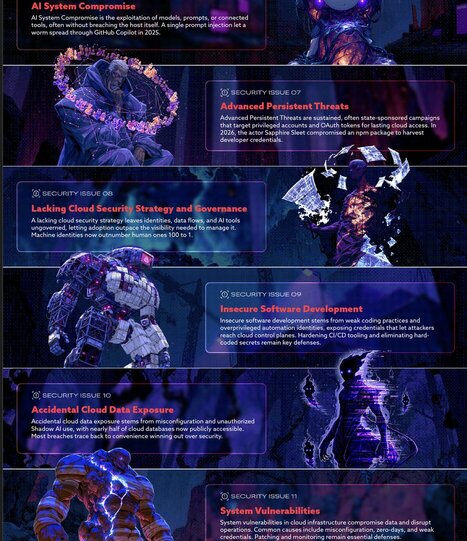
Security Issue #6: AI System Compromise
AI System Compromise is defined as the exploitation, manipulation, degradation, or unauthorized control of systems that embed artificial intelligence or machine learning components within their functionality. These threats target not only the surrounding infrastructure in which AI operates, but also AI-enabled components, including models, prompts, training and inference data, orchestration logic, connected tools, and decision pipelines.
Common AI Attack Vectors:
- Prompt injection and input manipulation
- Data or model poisoning
- Adversarial or evasive inputs
- Model theft or inference attacks
- Compromise of connected models, APIs, plugins, or pipelines
Security Issue #7: Advanced Persistent Threats
Advanced Persistent Threats (APTs) are defined as coordinated, resource-intensive cyber operations conducted by highly capable adversaries, most commonly state-sponsored groups or actors aligned with national strategic objectives. These campaigns are characterized by sustained access to target environments, operational patience, and the prioritization of intelligence collection, pre-positioning, or strategic disruption over immediate financial gain.
Security Issue #8: Lacking Cloud Security Strategy and Governance
Inadequate cloud security strategy or the inability to implement one represents a fundamental failure of business control: the inability to state with confidence which cloud technologies are in use, where sensitive data resides, and whether a threat can be detected and stopped before it causes harm.
A cloud security strategy defines how an organization approaches cloud adoption as a risk discipline: establishing shared responsibility boundaries, embedding security architecture into adoption decisions, assigning program-level ownership, and aligning cloud investment with regulatory obligations and risk appetite.
Security Issue #9: Insecure Software Development
Software development in cloud environments introduces a unique class of security risks where application-layer weaknesses can directly lead to cloud compromise. Insecure software development refers to implementation weaknesses and design flaws in code, dependencies, CI/CD pipelines, or integration design, which expose credentials, tokens, or over-privileged cloud identities, enabling attackers to access cloud control planes and SaaS platforms.
Security Issue #10: Accidental Cloud Data Exposure
Accidental cloud data exposure commonly results from misconfiguration, excessive permissions, weak access governance, insecure software deployment practices, or unauthorized use of cloud and AI services.
Security Issue #11: System Vulnerabilities
Cloud service system vulnerabilities are weaknesses in cloud infrastructure, configuration, or design that can be exploited to compromise confidentiality, integrity, or availability of data and services. A cloud service stack is composed of discrete layers: application, platform, infrastructure, and datacenter — each with its own attack surface.
Vulnerabilities rarely stay contained. A weakness at one layer can cascade upward or downward, compromising the entire stack.
Conclusion and Future Outlook
The 2026 survey results tell a consistent story: the boundaries between cloud security and AI security are collapsing. Misconfiguration, identity weaknesses, insecure APIs, supply chain dependencies, and governance failures have not gone away, but AI is now embedded throughout the cloud stack, in applications, pipelines, operational tooling, and the attacks targeting them all. The introduction of AI-Driven Attacks and AI System Compromise as discrete threat categories is not an approaching trend to watch. It is already the present condition.
Several developments will shape what comes next:
- AI-Enabled Attacks Will Become Harder to Distinguish from Legitimate Activity
- AI Systems Require Security Programs of Their Own
- Change Control Has Become a First-Order Security Problem
- Supply Chain Exposure Will Grow Faster Than Visibility
- Complexity Is No Longer Just Operational Overhead. It Is a Security Condition
Four priorities follow from these findings:
- Strengthen Identity Governance
- Treat AI Systems as a Distinct Security Domain
- Improve Change Control and Ecosystem Governance
- Build Visibility, Resilience, and Operational Awareness
AI Is Accelerating Cloud Risk, Not Replacing the Fundamentals
One of the most important lessons from the CSA report is that AI does not make established cloud security principles obsolete; it makes getting them right more urgent.
AI-enhanced attackers may discover vulnerabilities faster, generate more sophisticated malicious code, or automate parts of an attack. But many successful compromises still depend on familiar weaknesses: excessive privileges, exposed services, insecure configurations, insufficient monitoring, vulnerable applications, and gaps in governance.
This makes Zero Trust, least privilege, strong identity and access management, secure configuration, workload protection, continuous monitoring, vulnerability management, and incident resilience even more important.
CSA specifically recommends continuous identity verification and least-privilege access alongside micro-segmentation to limit the blast radius of an intrusion. It also calls for greater board-level oversight of AI risk and stronger protection of software supply chains and CI/CD pipelines.
Organizations should also recognize that AI can be part of the defence. The report argues that relying solely on static, rule-based defences is increasingly inadequate against AI-enhanced attacks and points toward AI-powered security capabilities that can help defenders operate closer to machine speed.
The answer to an AI-accelerated threat landscape is not simply buying more AI security tools. It is building a mature cloud security foundation capable of using those tools effectively.
Build Cloud Security for the Threats of Today and Tomorrow
As cloud and AI environments become more interconnected, organizations need security strategies that evolve with them.
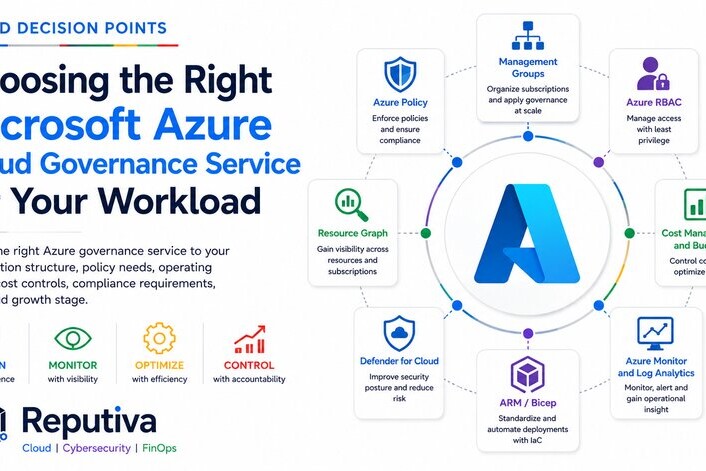
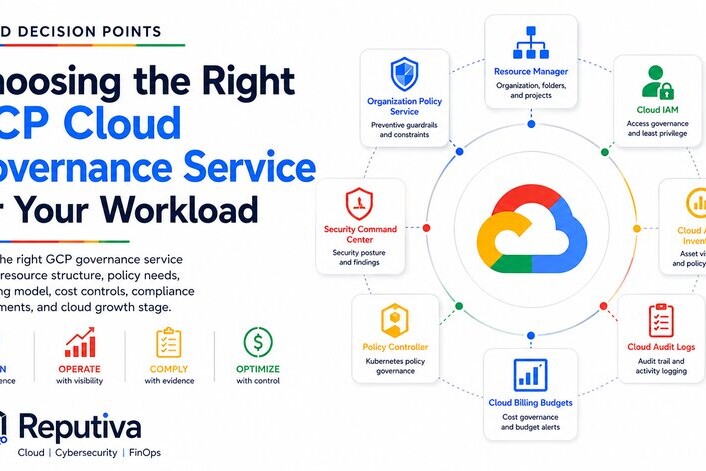
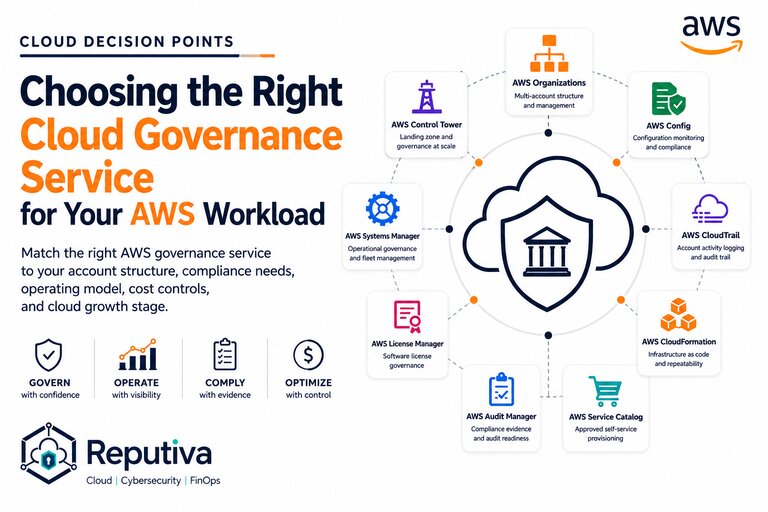
Reputiva helps organizations assess and strengthen their cloud security posture across AWS, Microsoft Azure, and Google Cloud, with a focus on cloud security architecture, identity and access management, security governance, configuration, monitoring, resilience, and emerging AI risks.
Whether you are migrating workloads to the cloud, reviewing an existing environment, adopting AI services, or strengthening your multi-cloud security strategy, Reputiva can help you identify gaps, prioritize risks, and develop a practical roadmap toward a more secure and resilient cloud environment.
Ready to strengthen your cloud security posture? Contact Reputiva to discuss a Cloud Security Assessment and identify where your organization should focus next.