The 19th edition of the Verizon Data Breach Investigation Report digs into more than 31,000 actual real-world security incidents, of which more than 22,000 were confirmed data breaches involving organizations in 145 countries. The report’s dataset covers Oct 2024 through Nov 2025.
The core theme of the 2026 DBIR: while attackers continue evolving their techniques, organizations that maintain strong cybersecurity fundamentals remain far better positioned to reduce risk and improve resilience.
Keeping a strong foundation in the face of change.
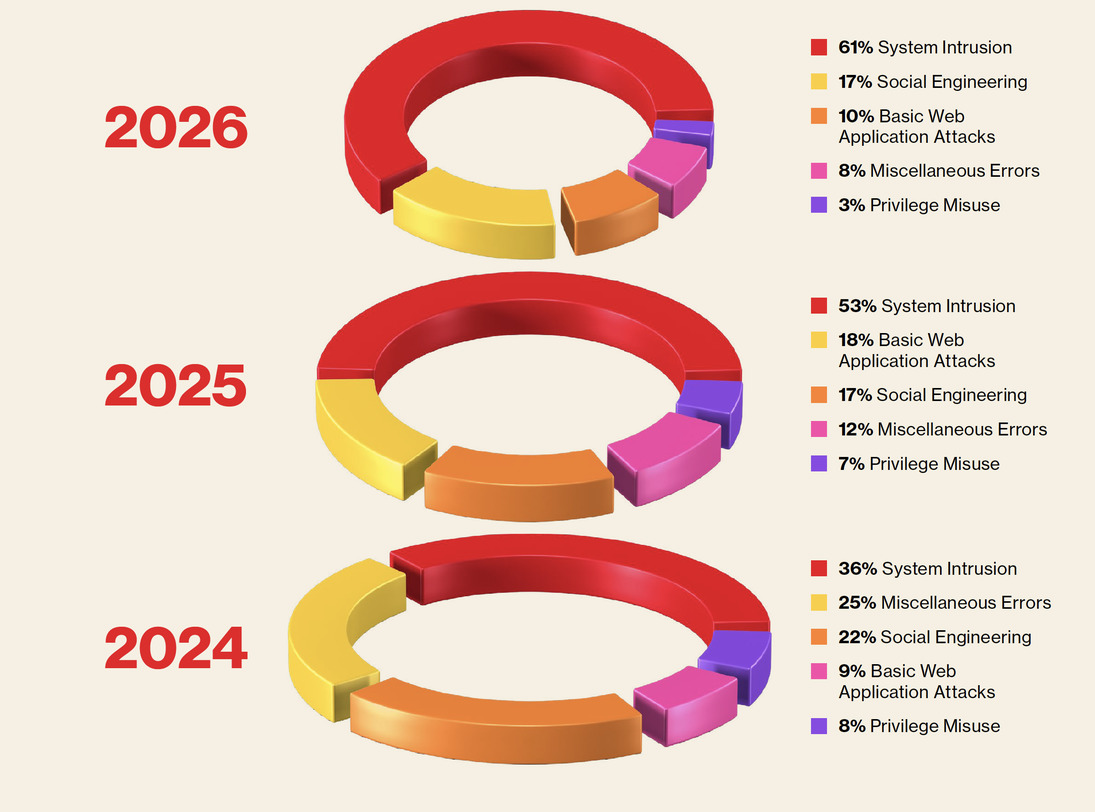
The Data Breach Investigations Report (DBIR) focuses on the analysis of anonymized cybersecurity incident data that Verizon collects each year from almost 100 data contributors. Those data points are normalized using the Vocabulary for Event Recording and Incident Sharing (VERIS) framework.
The Vocabulary for Event Recording and Incident Sharing (VERIS) is a standardized framework of metrics designed to allow organizations to document and classify cybersecurity incidents in a structured, repeatable manner. Developed by Verizon, it forms the foundational taxonomy used to build the annual Data Breach Investigations Report (DBIR).
Key Findings
Rise of vulnerability exploitation
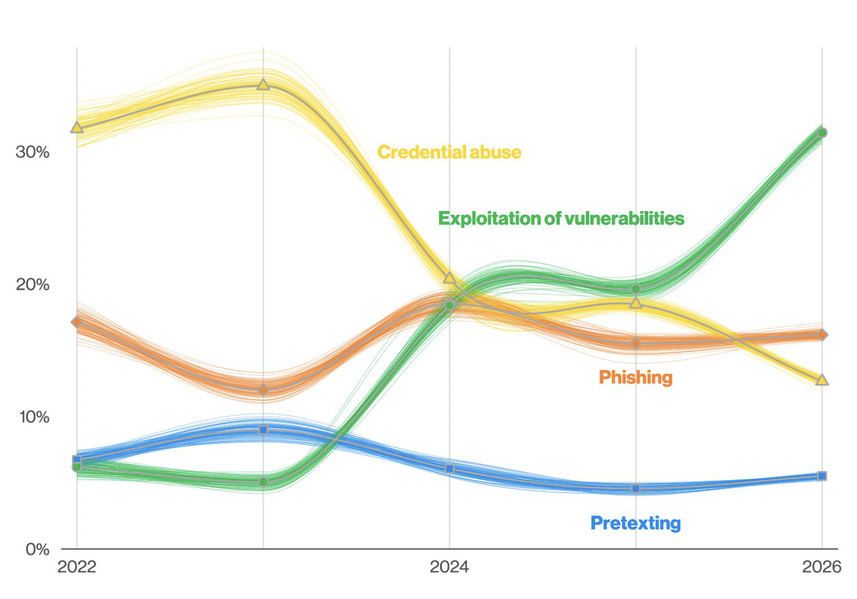
Exploitation of vulnerabilities is now the most common initial access vector for breaches. It has risen to 31% in this year’s reporting dataset, while credential abuse—the previous leader—is down to 13%.
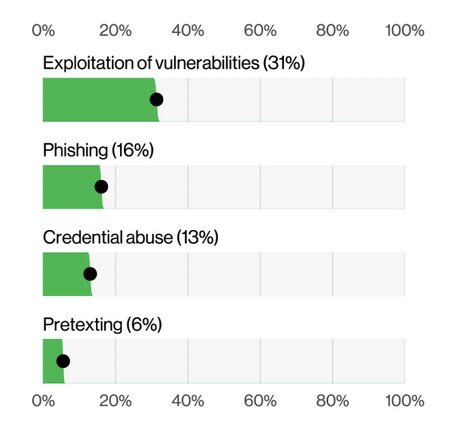
Exploitation of vulnerabilities has become the most common way attackers gain initial access into environments, rising to 31% of breaches, while credential abuse dropped to 13%
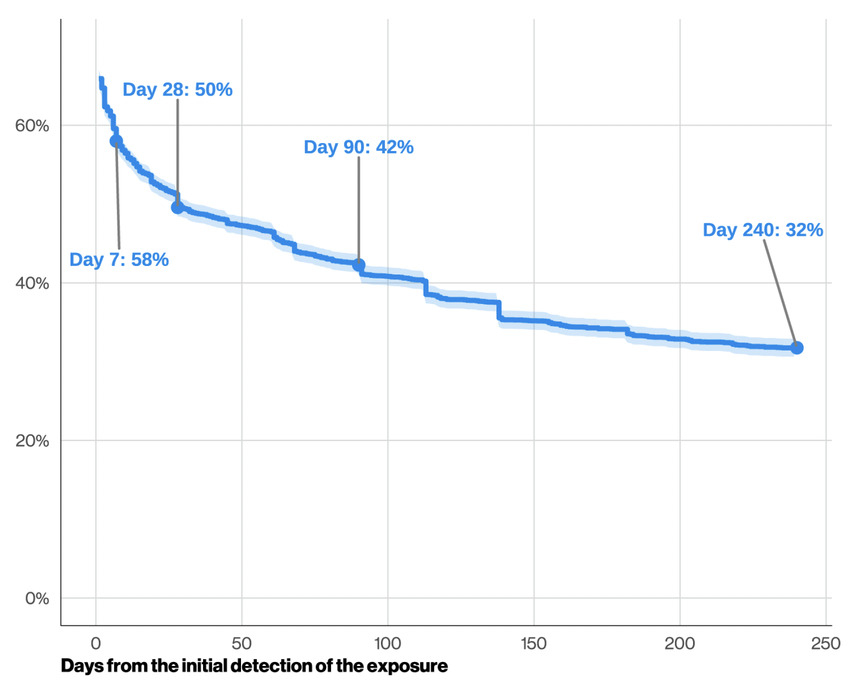
The median time for full resolution went up to 43 days, almost two weeks more than the previous year’s 32 days. In the median case, organizations had 50% more critical vulnerabilities to patch in this year’s reporting dataset compared to the previous year.
Only 26% of critical vulnerabilities were fully remediated in 2025, while the median remediation time increased to 43 days.
 Growth in ransomware and third-party breaches continues.
Ransomware grew again to 48% of all breaches, up from 44% from the previous year. However, ransom payments have continued to decline among our dataset, as 69% of ransomware victims didn’t pay. The median amount of ransom paid also continues a downward trend: $139,875 in this year’s reporting dataset from $150,000 in the previous year.
Generative AI impacting the threat landscape
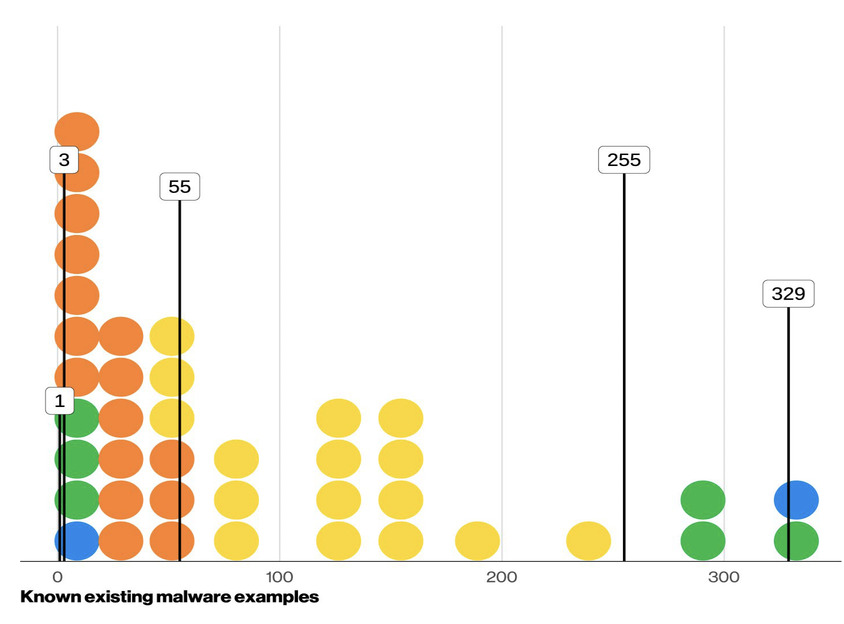
Threat actors are demonstrably using GenAI to help at different stages of attack, including targeting, initial access, and development of malware and other tools. The median threat actor researched or used AI assistance in 15 different documented techniques, with some Actors leveraging as many as 40 or 50.
Most AI-assisted development of malware and tooling was associated with well-known and defined attack techniques, with a median of 55 existing known malware examples performing the same functions.
Mobile-centric Social Engineering
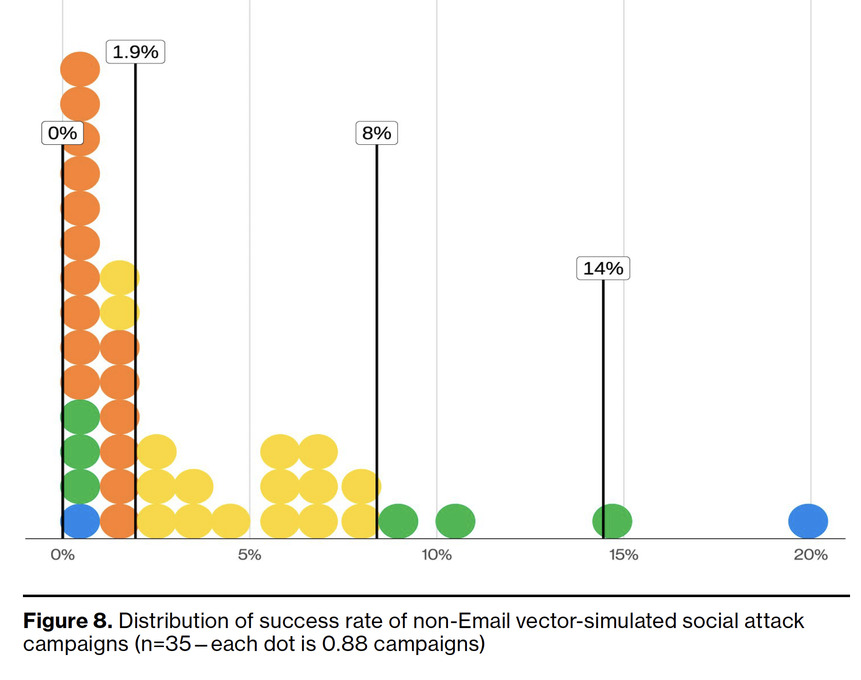
Human element was present in 62% of breaches, a slight increase from the previous year’s 60%. Pretexting has become a more common initial access vector to ransomware and extortion attacks. In all breaches, it reached 6%, while Phishing remained at 16% like the previous year. Pretexting is an attacker tactic in which a trusted relationship is built through concocted scenarios to trick the user into taking an action that unknowingly compromises the organization, frequently by voice communications but also seen via email or text message.
Shadow AI policy violations and malicious insiders
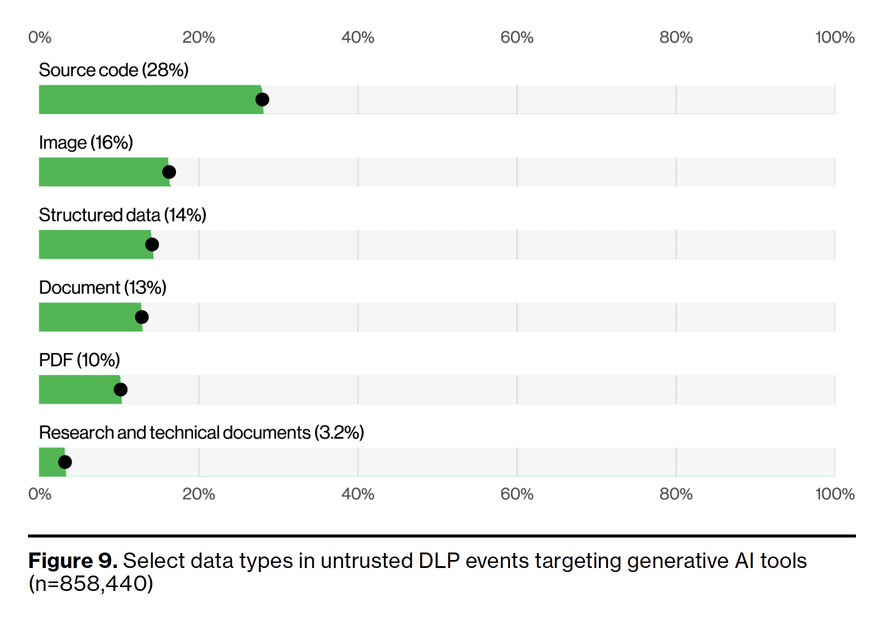
Regarding usage of unauthorized GenAI services (“Shadow AI”), 67% percent of users are using non-corporate accounts on their corporate devices to access AI services, a slight decrease from the previous year. However, 45% of employees are now considered regular users of AI (authorized or not) on their corporate devices, up from 15% in the previous year.The most common type submitted to external GenAI models was source code, followed by images and other types of structured data. In 3.2% of DLP policy violations.
Cybersecurity fundamentals are becoming strategic business requirements
At Reputiva, we believe the Verizon 2026 DBIR reinforces a critical reality for organizations: cybersecurity fundamentals are no longer optional operational tasks; they are strategic business requirements.
As cloud adoption, AI adoption, and digital transformation continue accelerating, organizations must strengthen foundational areas such as:
- Vulnerability management
- Identity and access management
- Cloud security architecture
- Third-party risk governance
- Security monitoring and response
- Backup and resilience planning
- Zero Trust security strategies
The organizations that succeed over the next decade will not necessarily be the ones with the most tools, but the ones with the strongest operational discipline, visibility, and security maturity across AWS, Azure, and GCP environments.
Cybersecurity Readiness starts with the Fundamentals
Cyber threats are evolving rapidly, but organizations that improve visibility, strengthen security fundamentals, and modernize cloud security architecture will be far better positioned to reduce risk and improve resilience.
Reputiva helps organizations strengthen cybersecurity posture, modernize cloud environments, and improve operational resilience across AWS, Azure, and GCP.
Book a Consultation to discuss your organization’s cybersecurity, cloud security, and digital resilience strategy.